
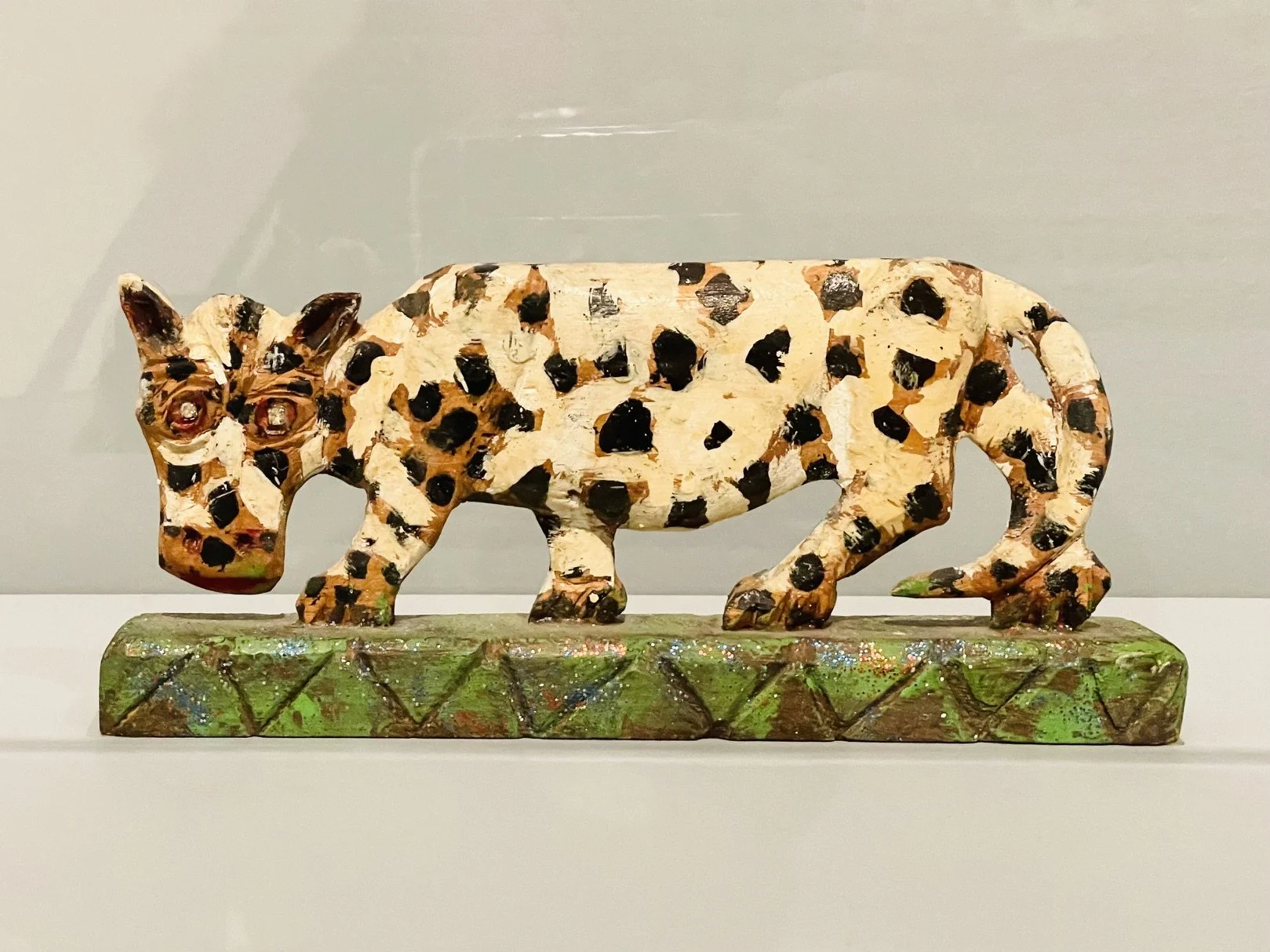
Elijah Pierce (1892-1984), Untitled (Leopard) 1978, Columbus Ohio, Paint on wood.
My First and possibly favourite pick - I love the silhouette and naively painted coat.
This past weekend I took a solo trip in the pouring rain to the American Folk Art Museum uptown. It’s been on my list for a while now - sadly I missed the quilting exhibit but luckily for us all their online archive is great (as is their gift shop if you need ideas for a crafty person in your life). There is something wonderfully freeing about a solo museum or gallery trip - linger for the good stuff and move on past the pieces which don’t spark interest. And since I was without kids you BET I started in the gift shop… hah!
I picked five pieces I loved and wanted to share with you - starting with a gorgeous wooden sculpture of a leopard by Elijah Pierce (dated 1978). The leopard is somewhat naive in shape and I fell in love with the painted coat and glittery green base. Glitter feels really unexpected here, no? And yet to me it added some levity to the piece which otherwise feels quite solemn. Elijah was the son of a previously enslaved father and himself a preacher - the leopard references the animal’s biblical associations with power and watchfulness. In terms of my own work I love that this piece could inspire a naive paper cut-out or even a textured embossed piece? I've definitely added it to my inspiration folder.
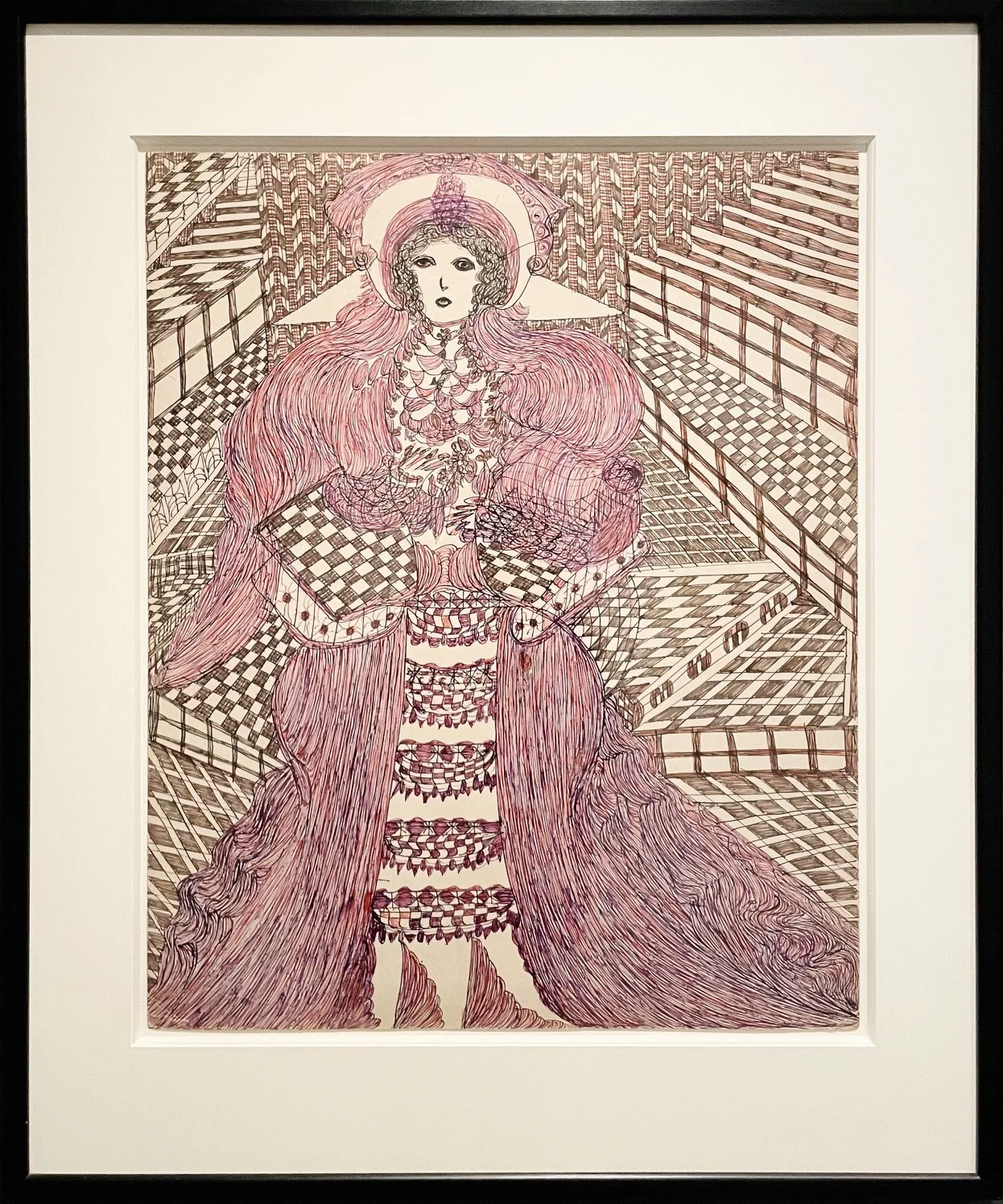
Madge Gill (1882-1961, London England), Untitled c.1954, ink on paper
Next up is the work of Madge Gill (1882-1961, London England) - wow I love her drawings. ‘Ink on Paper’ in the description notes hardly does her work justice - the layers and layers of texture and repeat pattern built up by Gill using a very limited colour palette really had my eyes zooming in and out for a long while; each individual ink stroke seems loose, un-precious (is that even a word?), casual even, but as a whole the piece reads as very measured, and graphic. The way Gill built her composition using geometric pattern inspires me to translate something similar through stitching. It is really a great example of how simple repeated marks can be used to build something a lot more intricate and interesting. It would be remiss of me not to mention that her life was marked by personal tragedy and much of her work was spontaneous improvisations she accredits to a spirit called Myrninerest. There is definitely an ‘otherworldly’ element to this piece I loved.
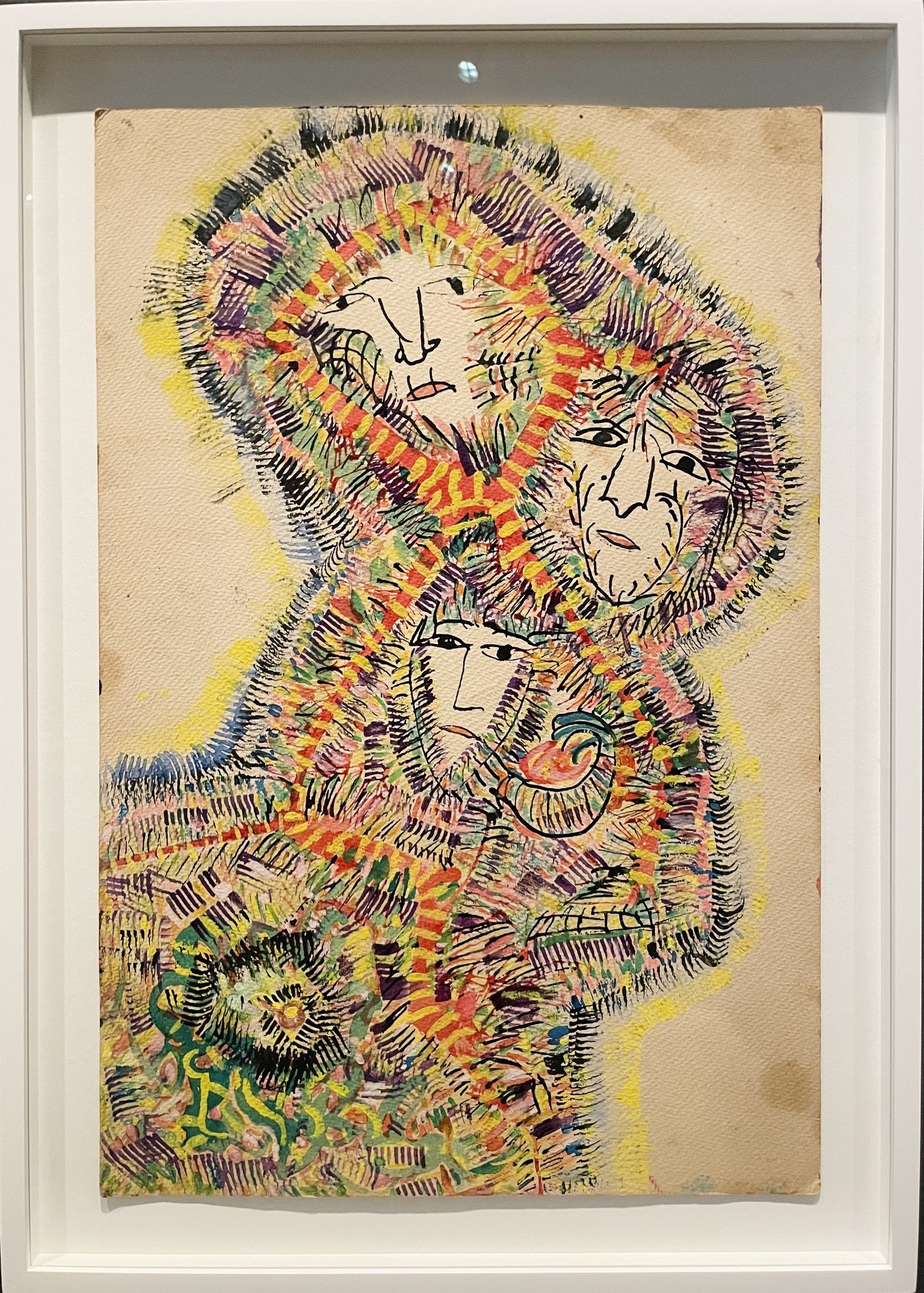
Janet Sobel (1893-1968,) Untitled, c1942-48, Gouache on Paper
Thirdly I chose a vibrant piece (untitled 1942-48) by Janet Sobel, a Ukrainian artist who lived in Coney Island. This piece featured three faces peering out of an exuberant background made of multicolored strokes that could be stitches on a canvas (there’s definitely a common thread between the pieces I picked - pardon the pun). Sobel survived a violent antisemitic attack on her family in 1908 that killed her father, she later immigrated from a Shtetl to Brighton Beach, New York. She was self-taught and her work reflects the decorative aspects of traditional Ukrainian clothing and the electric lights of Coney Island - her work is said to have inspired Jackson Pollock who viewed it in the 1940s. Sometimes an art piece finds it’s way into your heart for the strangest of reasons - for me I see ink marks that look like they’re made (very specifically) by a fountain pen I used at school for years and years. Strange how art can evoke emotion on such a granular level. I love the layers of colors, the concentric rings of pattern, but overall once again it’s the simple marks repeated that make this composition ‘sing’ to me.

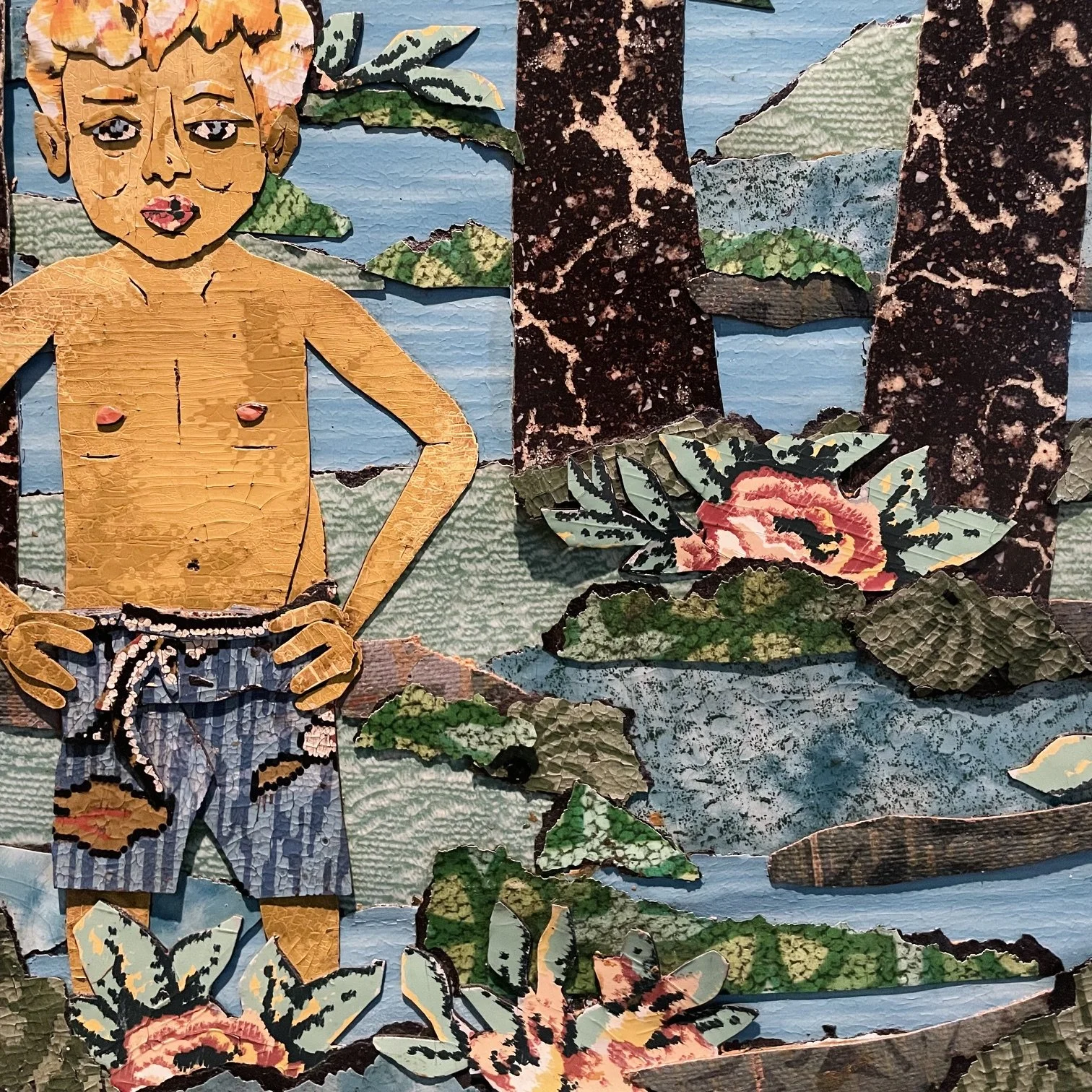
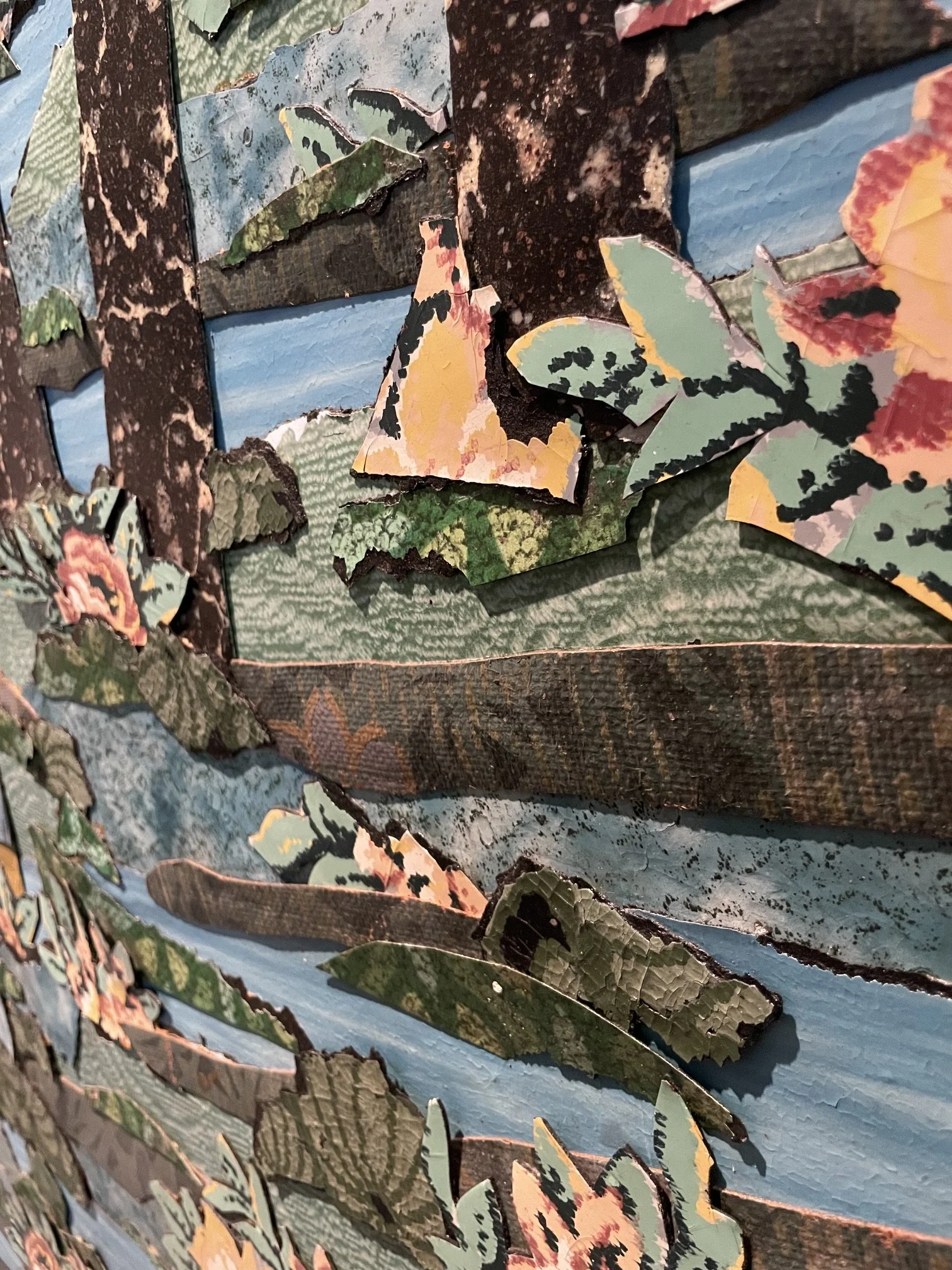
Bill Miller, Metropolitan Park, 2003, Linoleum on wood
My fourth choice is a huge collage by Bill Miller called ‘Metropolitan Park’ from 2003 - it’s made entirely of pieces of linoleum. Miller founded an art Co-Op - artists who frequently broke into disused factories and spaces and then recylced everyday objects into art. I didn’t set out to pick work from artists with tragic stories, but here we are. Sadly both Miller’s parents were killed in industrial accidents and his work often depicted scenes from his childhood photographs. I love the clash of pattern in this piece - the collection of linoleum layers that are juxtaposed - the elevation of a common everyday object to something special and powerful.
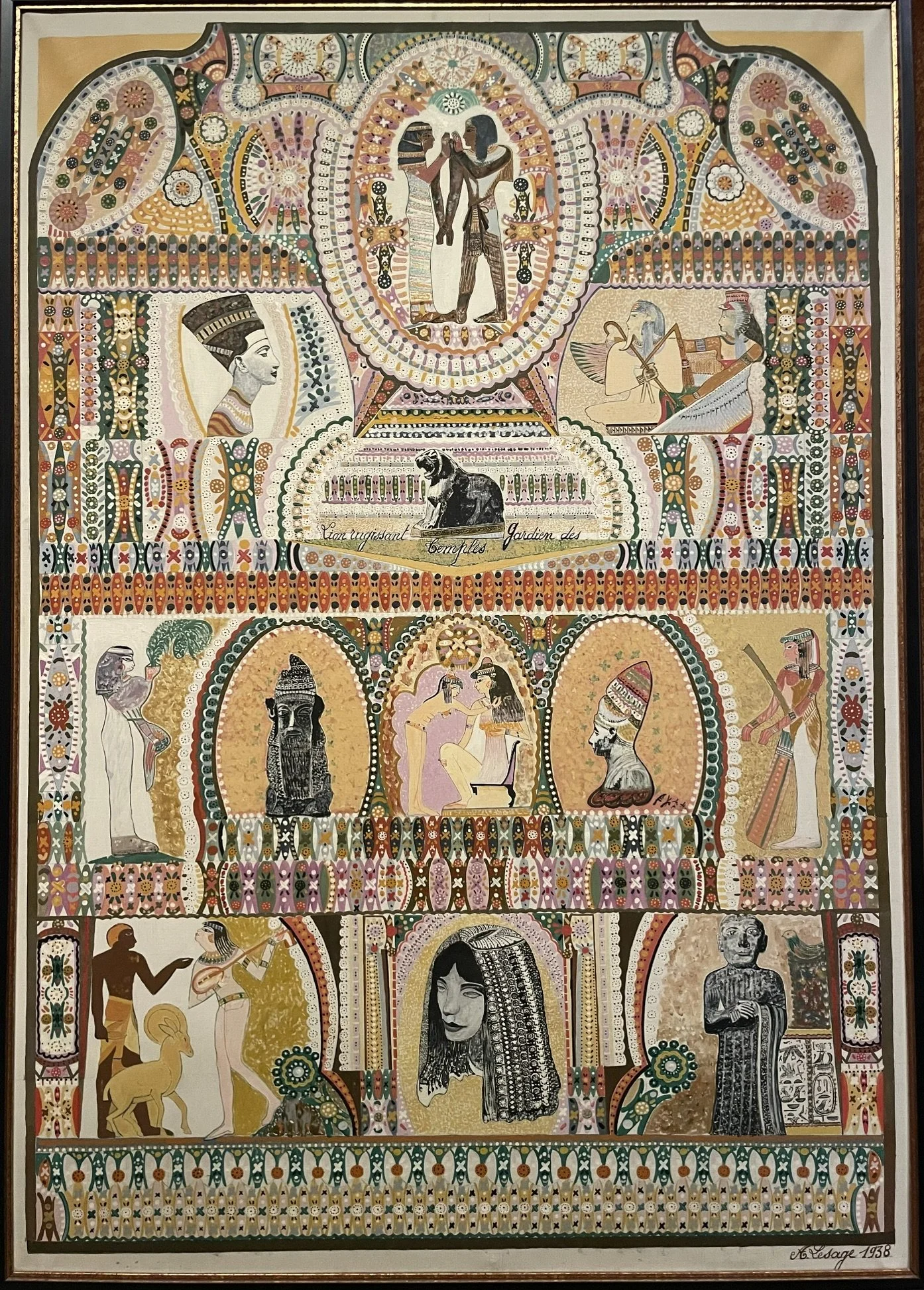
Augustin Lesage (1876-1954) Lion Rugissant Gardien des Temples, France 1938, Oil on Canvas
Lastly I discovered the work of Augustin Lesage - he lived in France 1876-1954 and worked with oils on canvas. How rich and beautiful is his art? I’m instantly hooked - with nods to the decorative art forms of Ancient Egypt, China, Japan and Indonesia, woven with religious and mythical motifs the end result is a labyrinth of pattern and colour and texture organized in a very methodical way - the pieces I saw were so intricate.
What unites all five for me is what might be called the logic of accumulation — the idea that meaning and beauty are built up through repetition, patience and the stacking of small decisions. This is also the logic behind embroidery, quilting and stitching - repeating simple steps to make something that it the sum of many similar parts. It's no coincidence that many of these artists were themselves outsiders: a barber, a coal miner, a Brooklyn housewife, a London medium. The textile vernacular runs deep in folk and self-taught art because it is itself an everyday tradition.
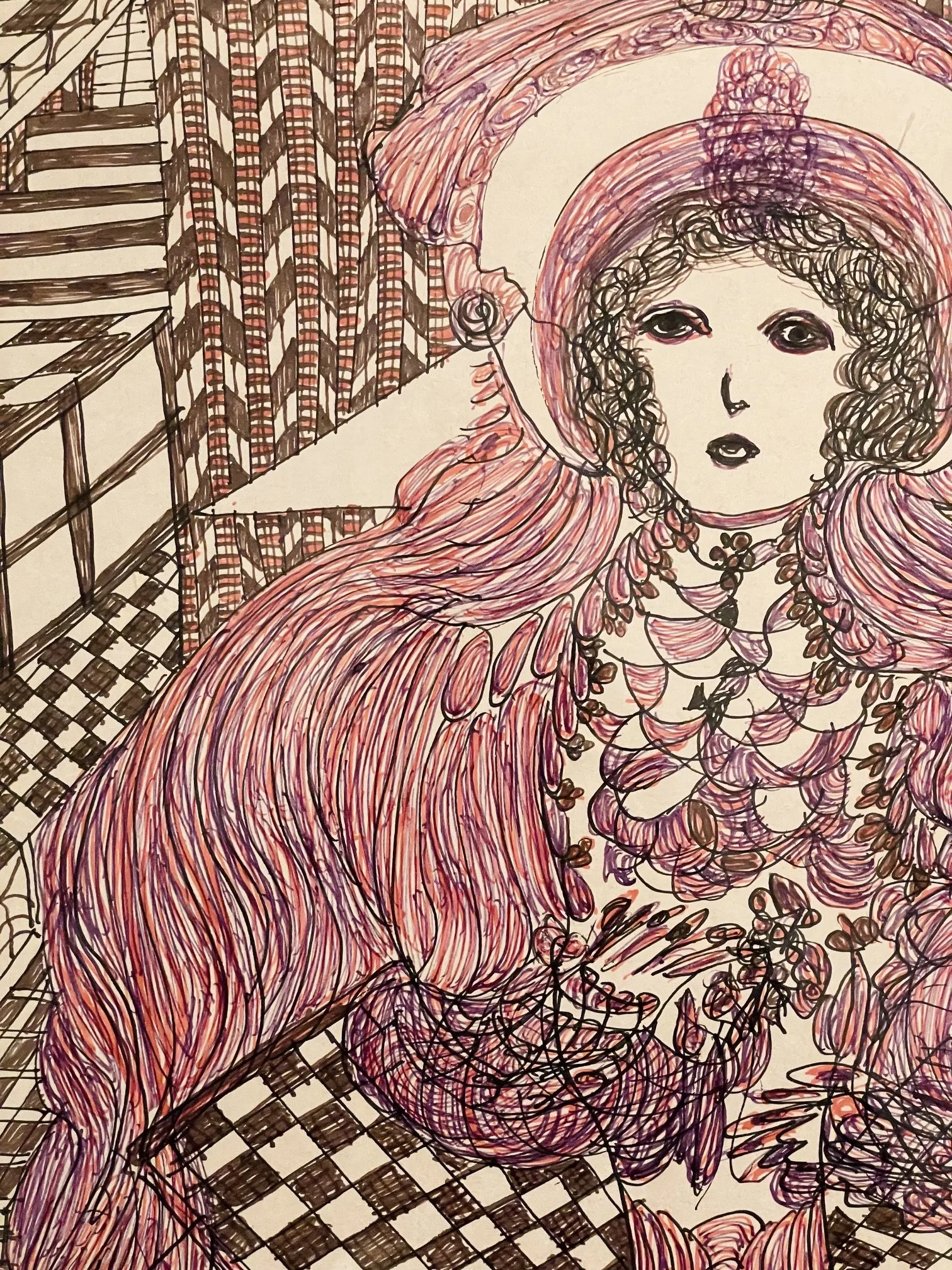
detail by Madge Gill - I love how she builds texture and pattern through repeated simple strokes
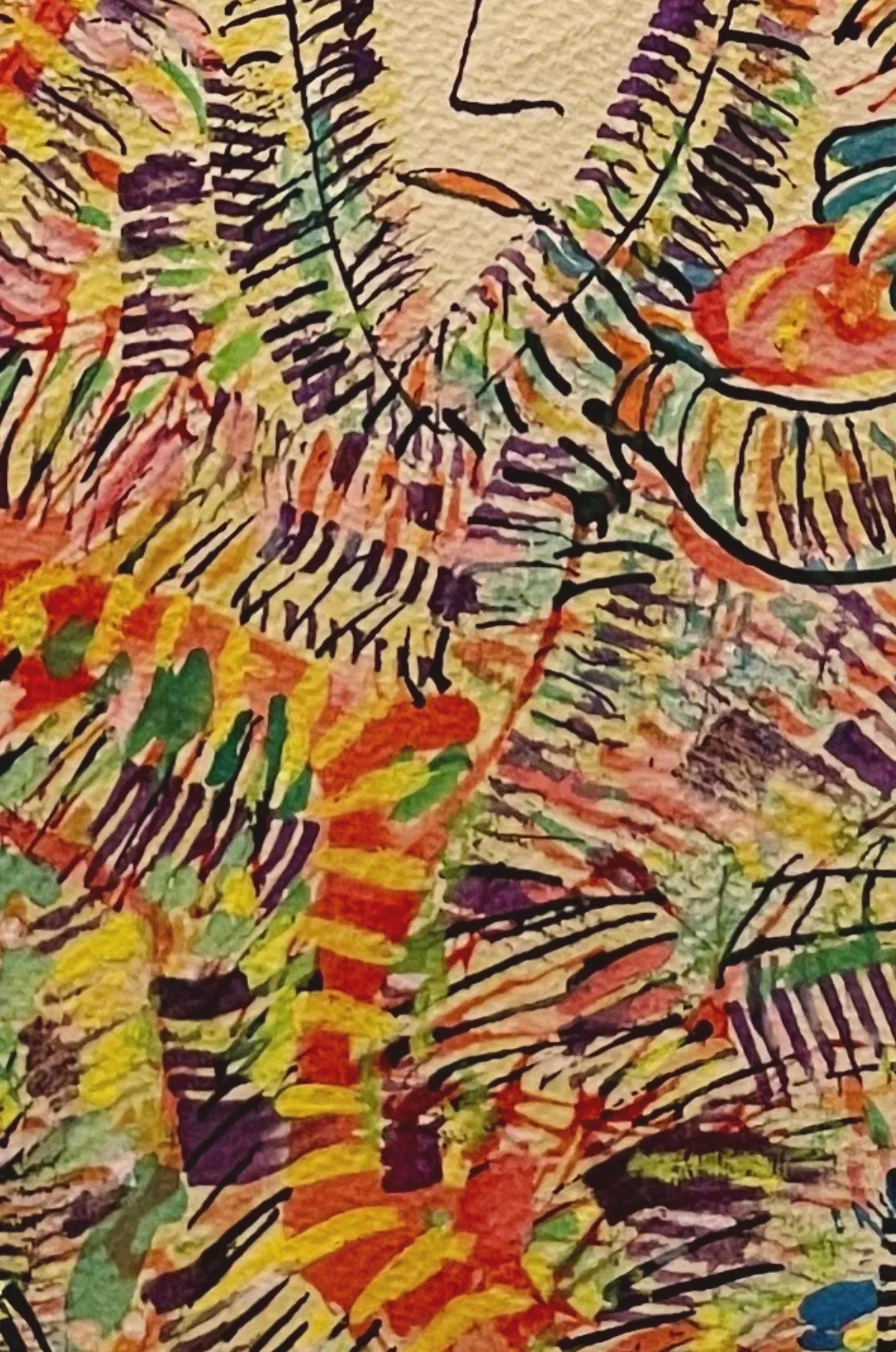
detail by Janet Sobel
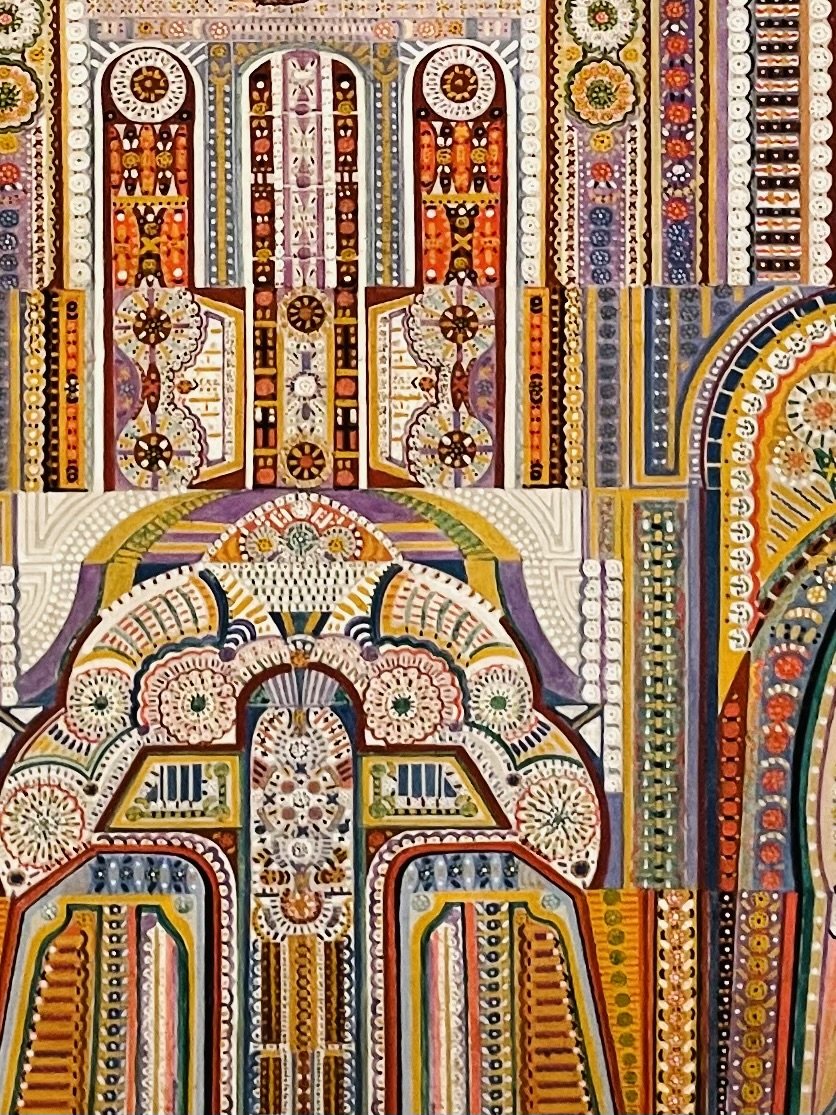
detail from Composition Symbolique (1928) Oil on Canvas. By Augustin Lesage