The Ornamental

The Art of a Decorated Life

A Note From The American Folk Art Museum

Stephanie Oshva

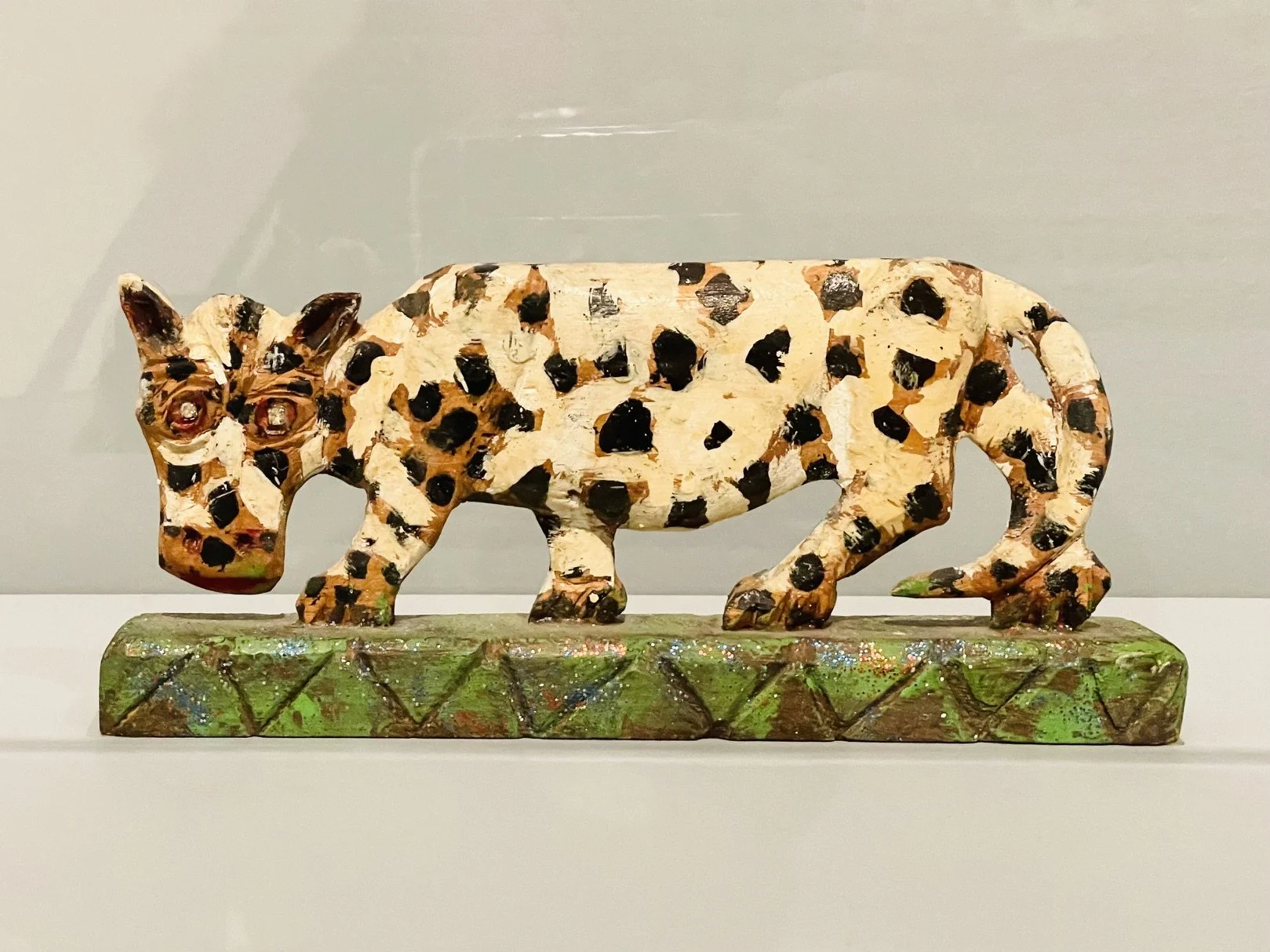
Elijah Pierce (1892-1984), Untitled (Leopard) 1978, Columbus Ohio, Paint on wood.

My First and possibly favourite pick - I love the silhouette and naively painted coat.

This past weekend I took a solo trip in the pouring rain to the American Folk Art Museum uptown. It’s been on my list for a while now - sadly I missed the quilting exhibit but luckily for us all their online archive is great (as is their gift shop if you need ideas for a crafty person in your life). There is something wonderfully freeing about a solo museum or gallery trip - linger for the good stuff and move on past the pieces which don’t spark interest. And since I was without kids you BET I started in the gift shop… hah!

I picked five pieces I loved and wanted to share with you - starting with a gorgeous wooden sculpture of a leopard by Elijah Pierce (dated 1978). The leopard is somewhat naive in shape and I fell in love with the painted coat and glittery green base. Glitter feels really unexpected here, no? And yet to me it added some levity to the piece which otherwise feels quite solemn. Elijah was the son of a previously enslaved father and himself a preacher - the leopard references the animal’s biblical associations with power and watchfulness. In terms of my own work I love that this piece could inspire a naive paper cut-out or even a textured embossed piece? I've definitely added it to my inspiration folder.
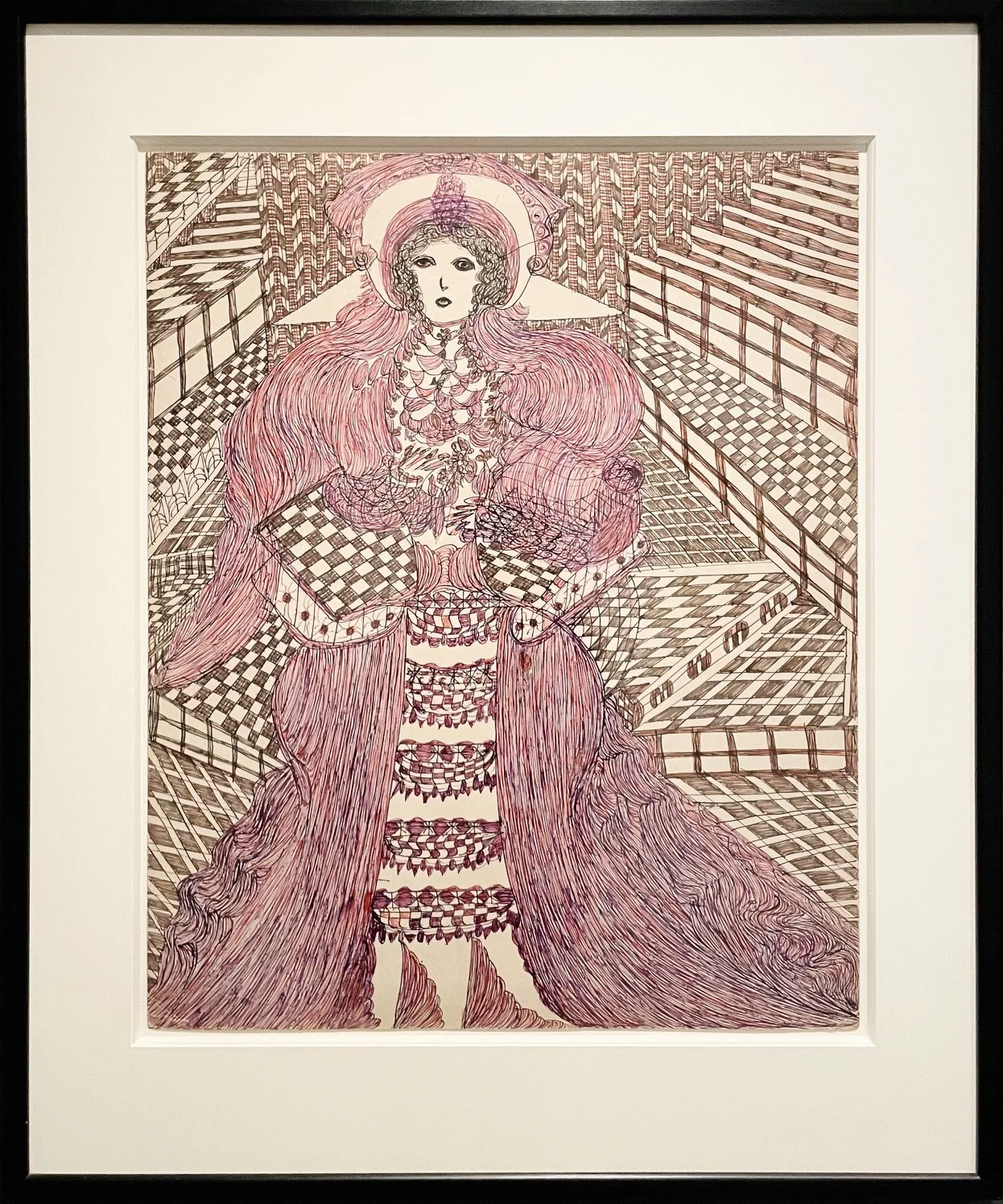
Madge Gill (1882-1961, London England), Untitled c.1954, ink on paper

Next up is the work of Madge Gill (1882-1961, London England) - wow I love her drawings. ‘Ink on Paper’ in the description notes hardly does her work justice - the layers and layers of texture and repeat pattern built up by Gill using a very limited colour palette really had my eyes zooming in and out for a long while; each individual ink stroke seems loose, un-precious (is that even a word?), casual even, but as a whole the piece reads as very measured, and graphic. The way Gill built her composition using geometric pattern inspires me to translate something similar through stitching. It is really a great example of how simple repeated marks can be used to build something a lot more intricate and interesting. It would be remiss of me not to mention that her life was marked by personal tragedy and much of her work was spontaneous improvisations she accredits to a spirit called Myrninerest. There is definitely an ‘otherworldly’ element to this piece I loved.
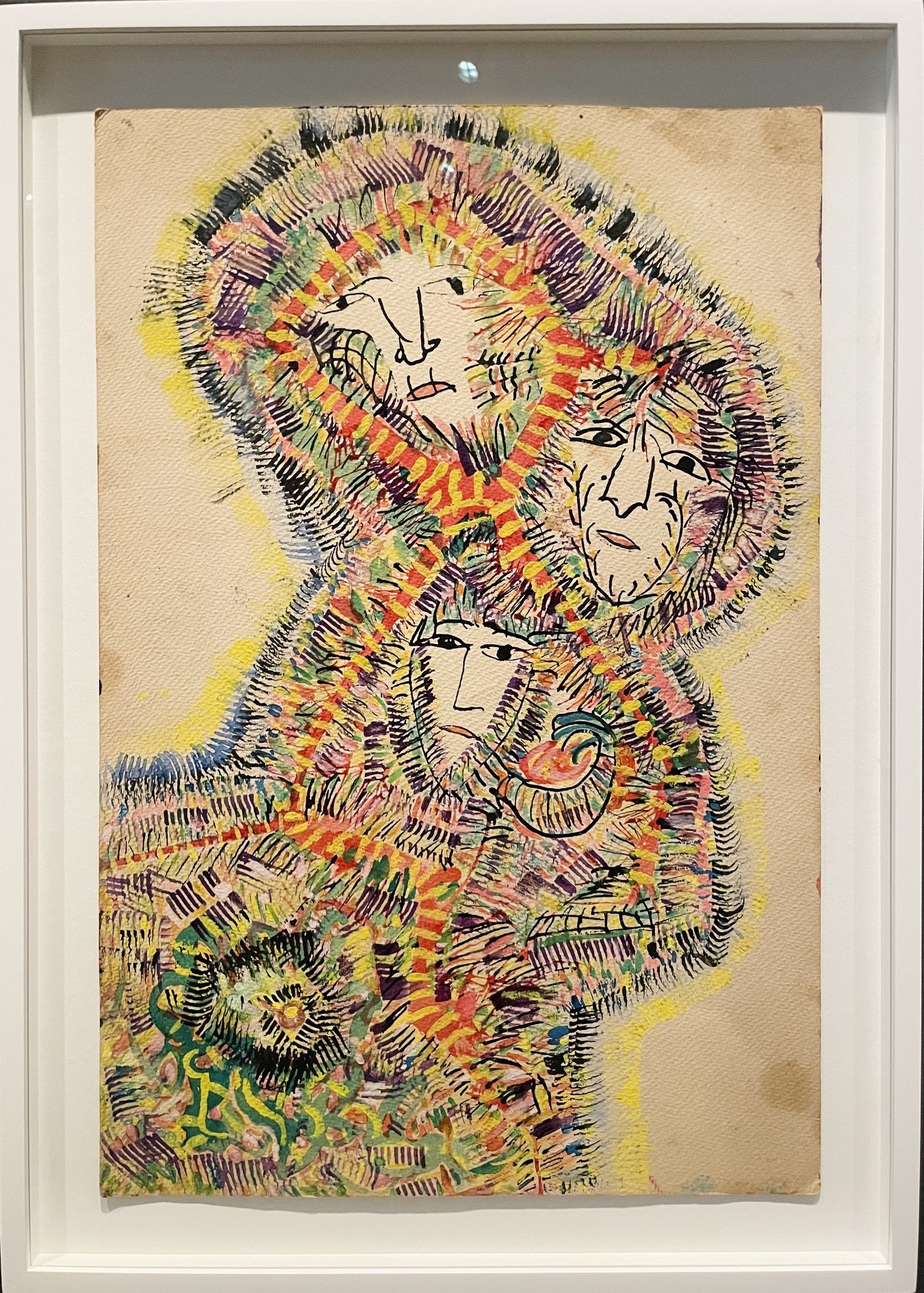
Janet Sobel (1893-1968,) Untitled, c1942-48, Gouache on Paper

Thirdly I chose a vibrant piece (untitled 1942-48) by Janet Sobel, a Ukrainian artist who lived in Coney Island. This piece featured three faces peering out of an exuberant background made of multicolored strokes that could be stitches on a canvas (there’s definitely a common thread between the pieces I picked - pardon the pun). Sobel survived a violent antisemitic attack on her family in 1908 that killed her father, she later immigrated from a Shtetl to Brighton Beach, New York. She was self-taught and her work reflects the decorative aspects of traditional Ukrainian clothing and the electric lights of Coney Island - her work is said to have inspired Jackson Pollock who viewed it in the 1940s. Sometimes an art piece finds it’s way into your heart for the strangest of reasons - for me I see ink marks that look like they’re made (very specifically) by a fountain pen I used at school for years and years. Strange how art can evoke emotion on such a granular level. I love the layers of colors, the concentric rings of pattern, but overall once again it’s the simple marks repeated that make this composition ‘sing’ to me.

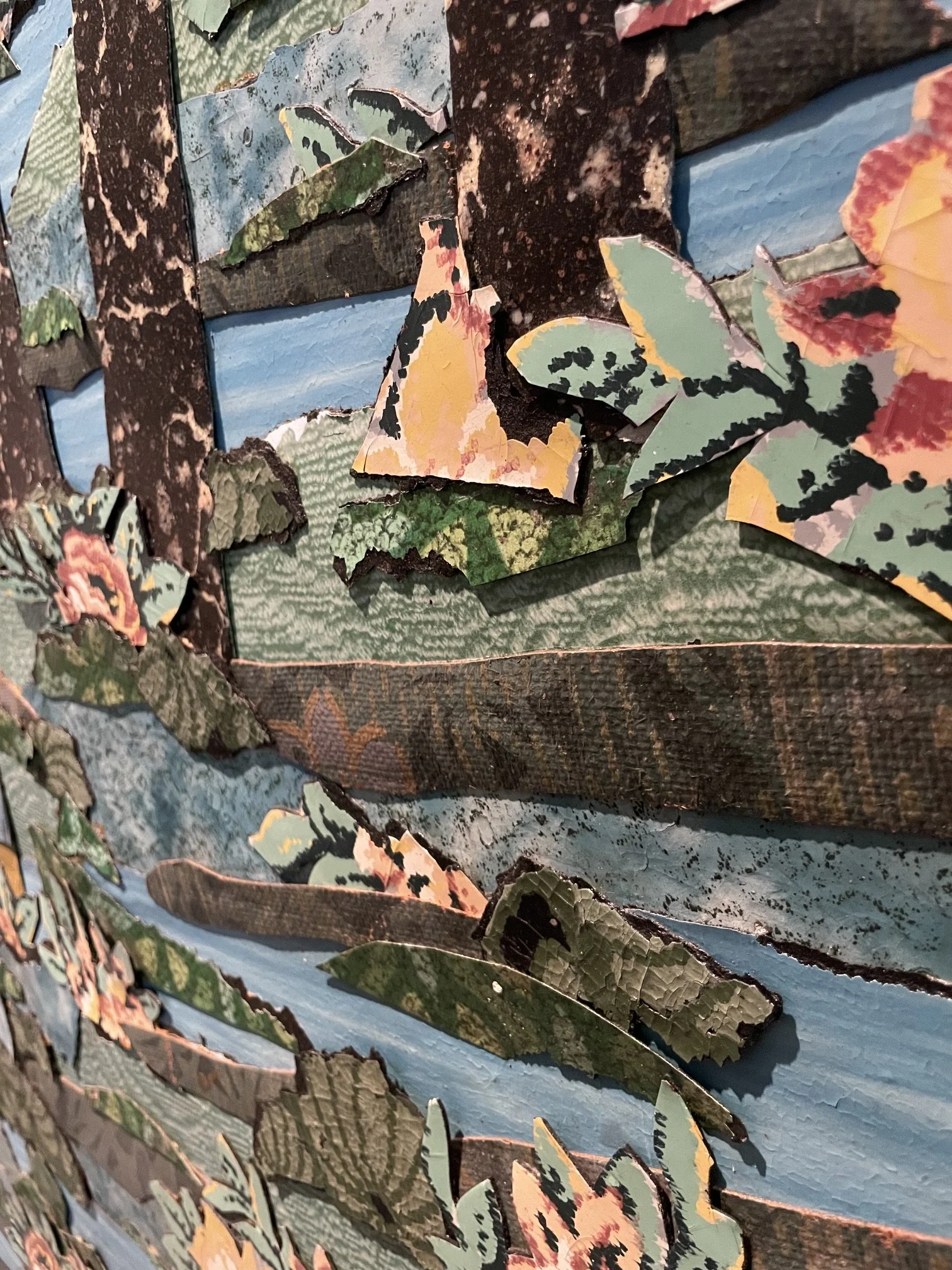
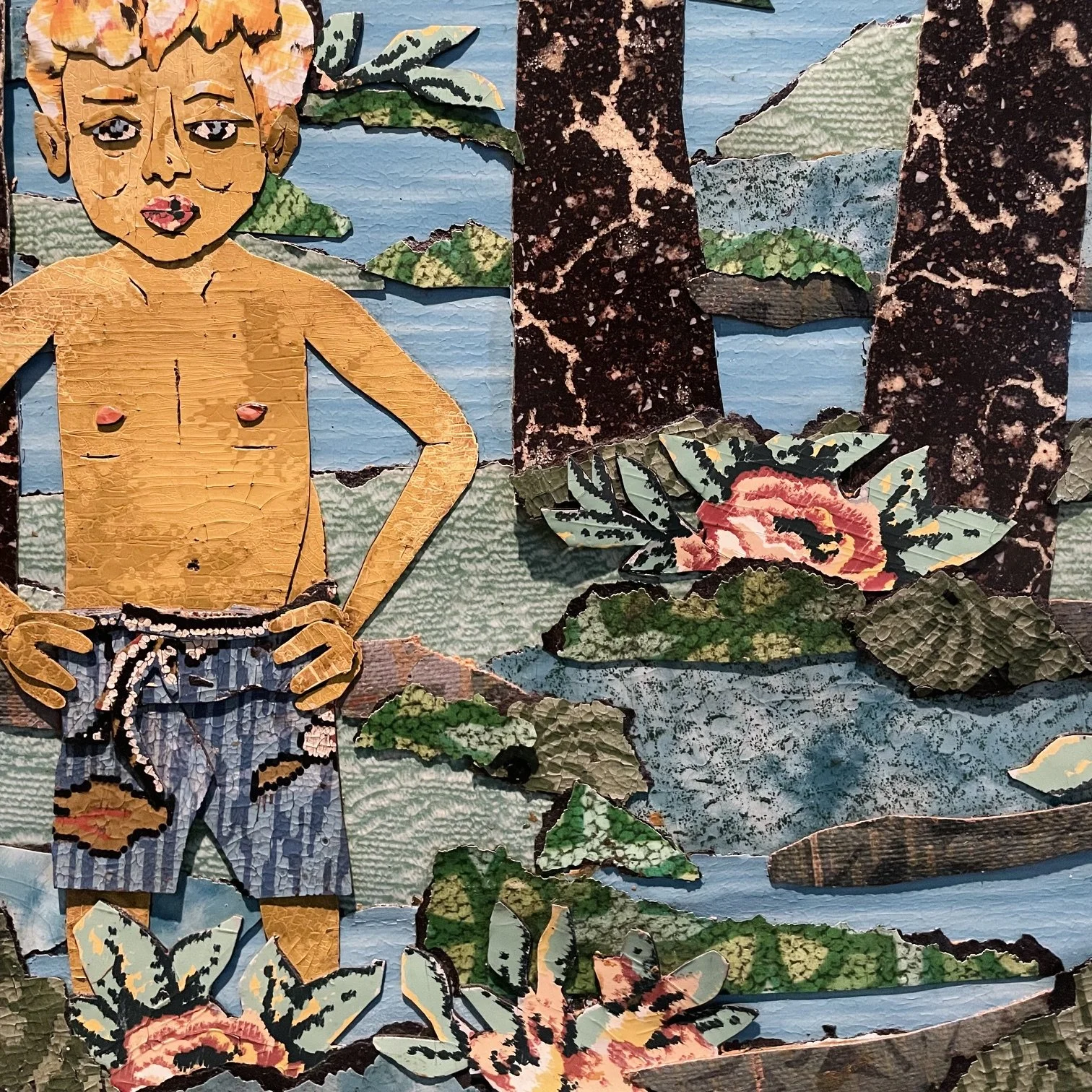
Bill Miller, Metropolitan Park, 2003, Linoleum on wood

My fourth choice is a huge collage by Bill Miller called ‘Metropolitan Park’ from 2003 - it’s made entirely of pieces of linoleum. Miller founded an art Co-Op - artists who frequently broke into disused factories and spaces and then recylced everyday objects into art. I didn’t set out to pick work from artists with tragic stories, but here we are. Sadly both Miller’s parents were killed in industrial accidents and his work often depicted scenes from his childhood photographs. I love the clash of pattern in this piece - the collection of linoleum layers that are juxtaposed - the elevation of a common everyday object to something special and powerful.
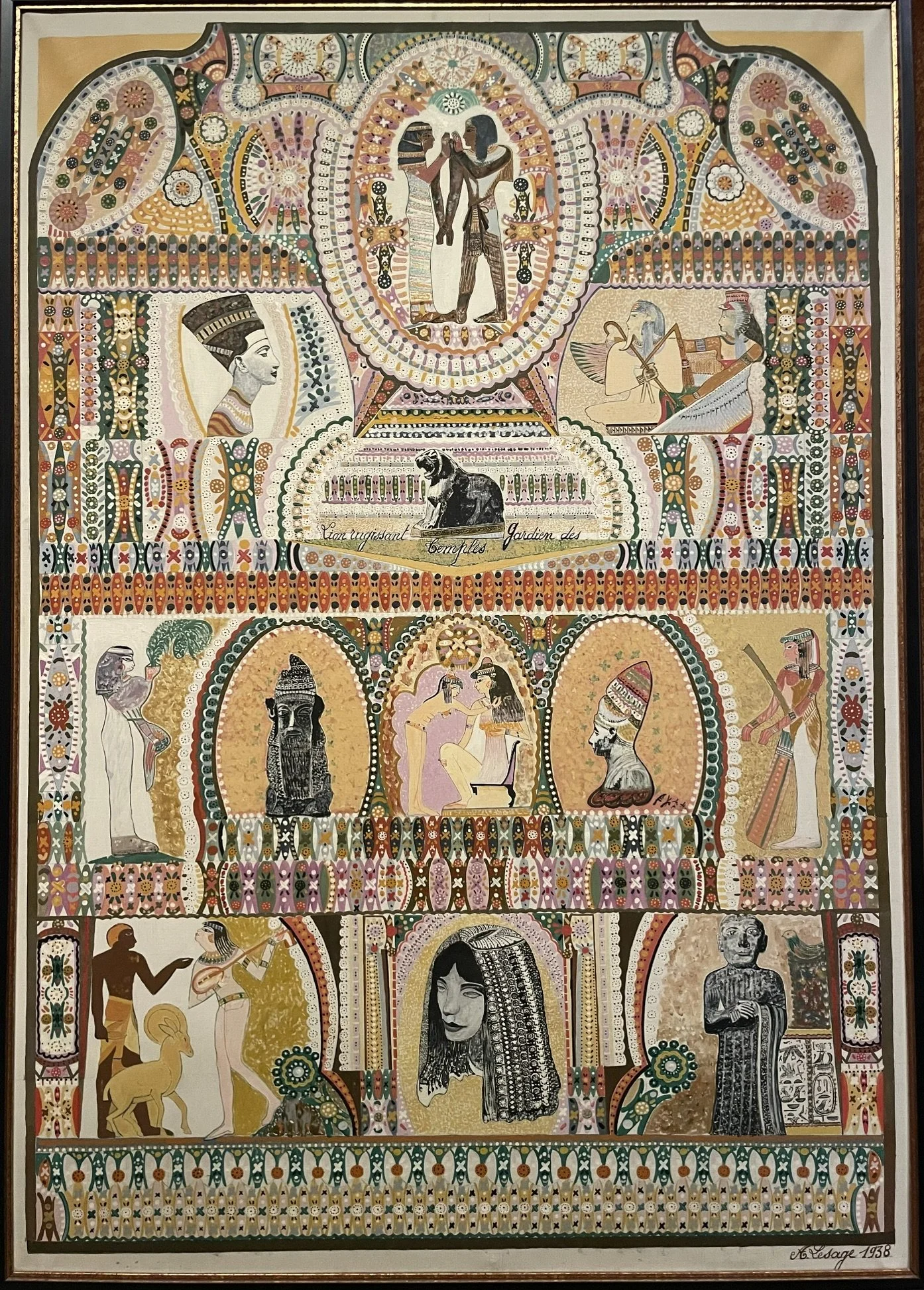
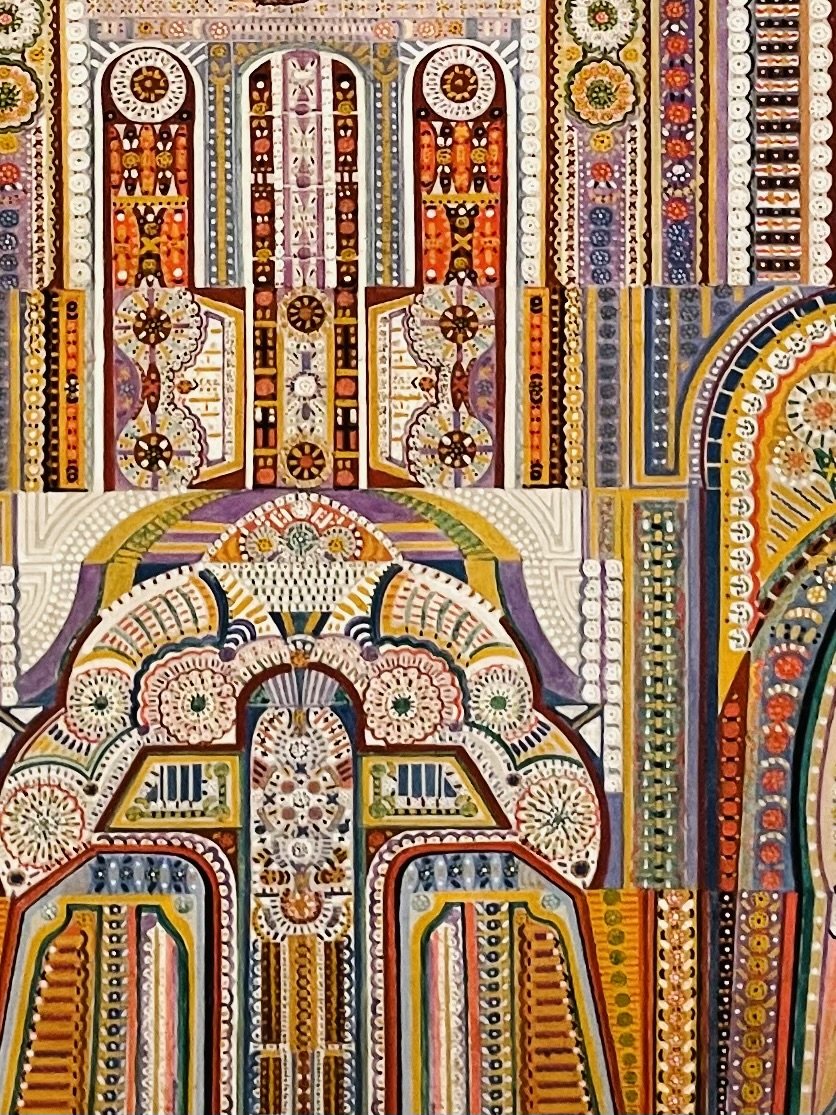
Augustin Lesage (1876-1954) Lion Rugissant Gardien des Temples, France 1938, Oil on Canvas

Lastly I discovered the work of Augustin Lesage - he lived in France 1876-1954 and worked with oils on canvas. How rich and beautiful is his art? I’m instantly hooked - with nods to the decorative art forms of Ancient Egypt, China, Japan and Indonesia, woven with religious and mythical motifs the end result is a labyrinth of pattern and colour and texture organized in a very methodical way - the pieces I saw were so intricate.

What unites all five for me is what might be called the logic of accumulation — the idea that meaning and beauty are built up through repetition, patience and the stacking of small decisions. This is also the logic behind embroidery, quilting and stitching - repeating simple steps to make something that it the sum of many similar parts. It's no coincidence that many of these artists were themselves outsiders: a barber, a coal miner, a Brooklyn housewife, a London medium. The textile vernacular runs deep in folk and self-taught art because it is itself an everyday tradition.
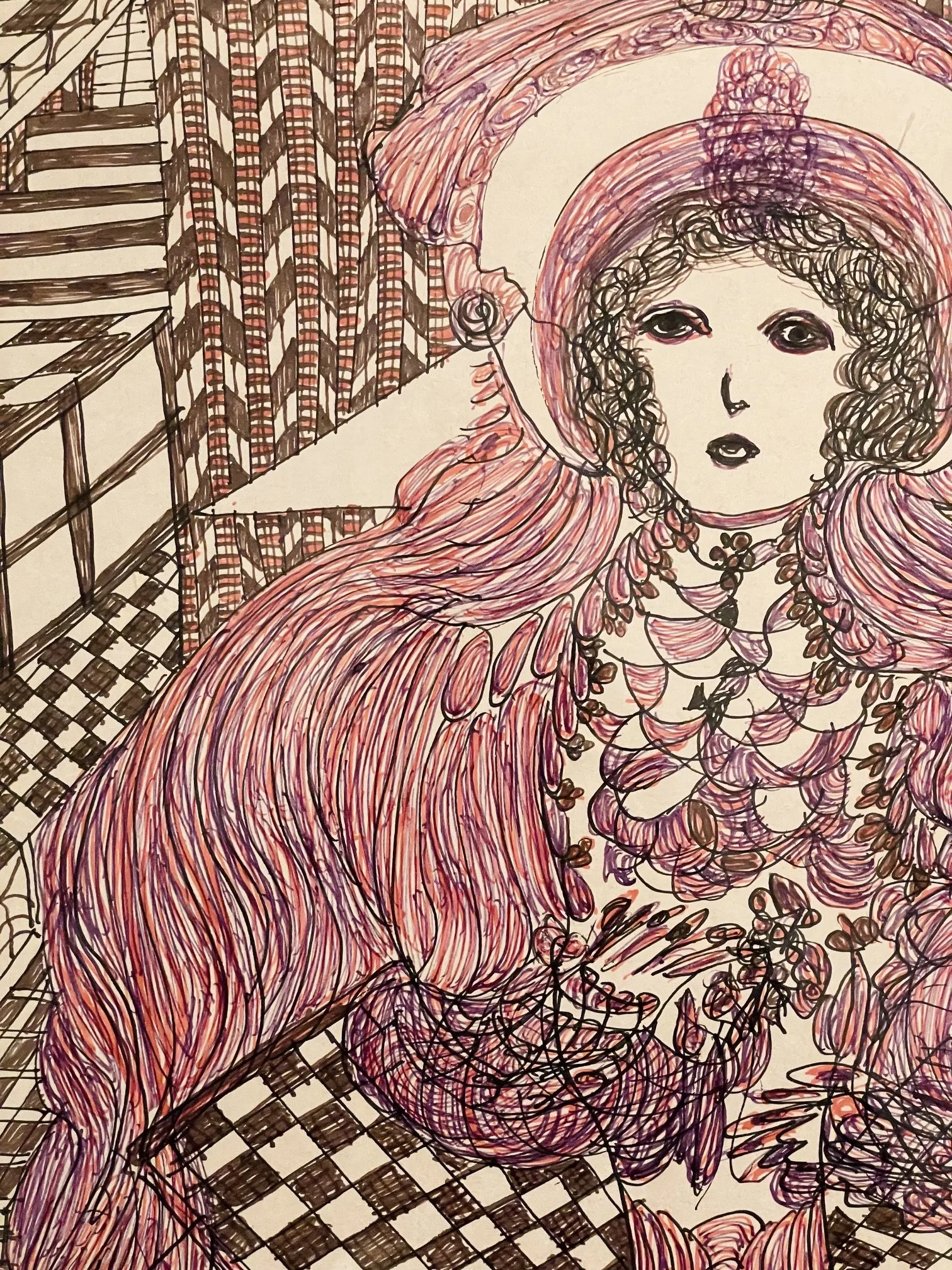
 

detail by Madge Gill - I love how she builds texture and pattern through repeated simple strokes
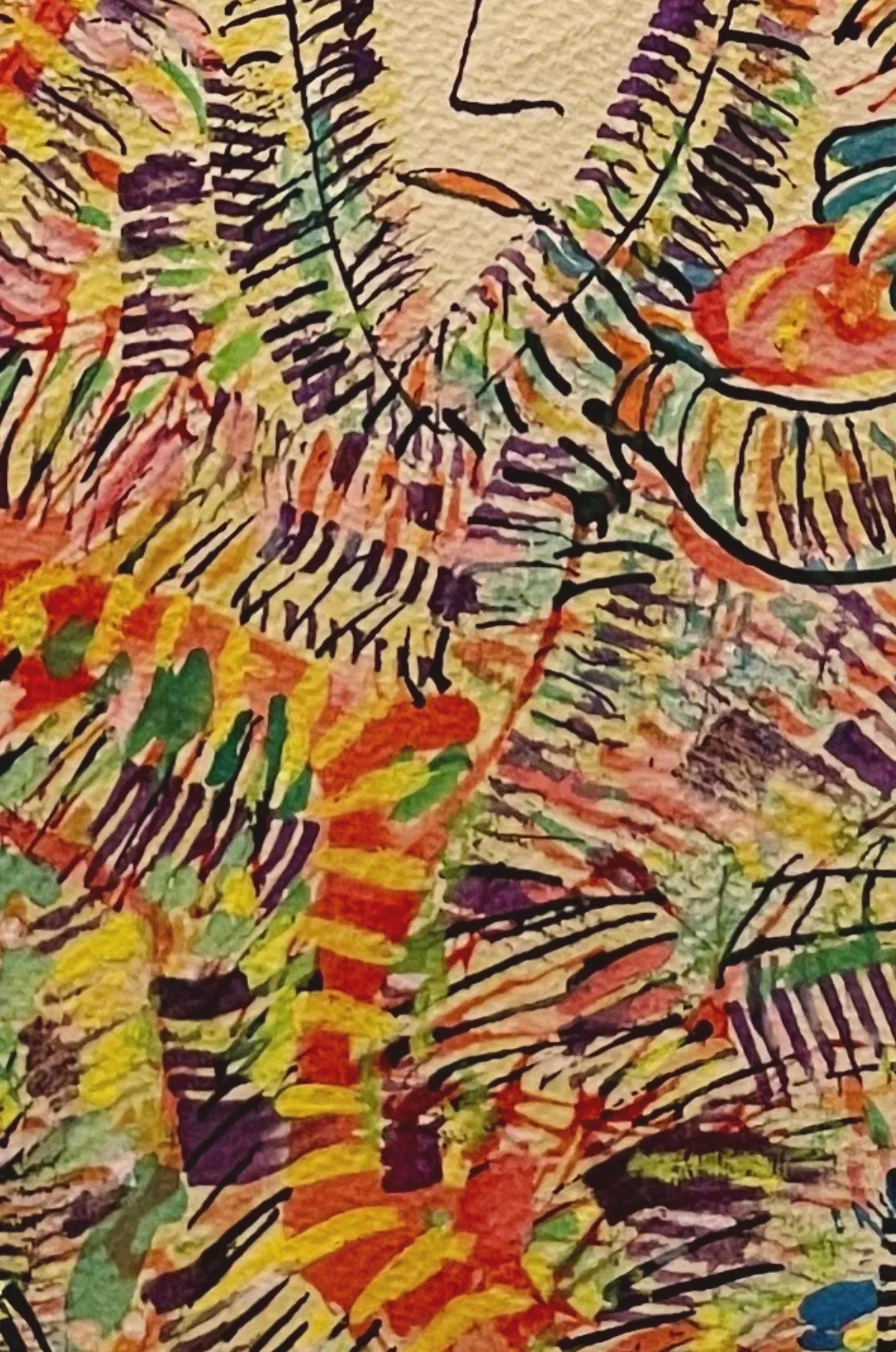
 

detail by Janet Sobel


detail from Composition Symbolique (1928) Oil on Canvas. By Augustin Lesage
A Note on Unswept Floors

Stephanie OshvaComment

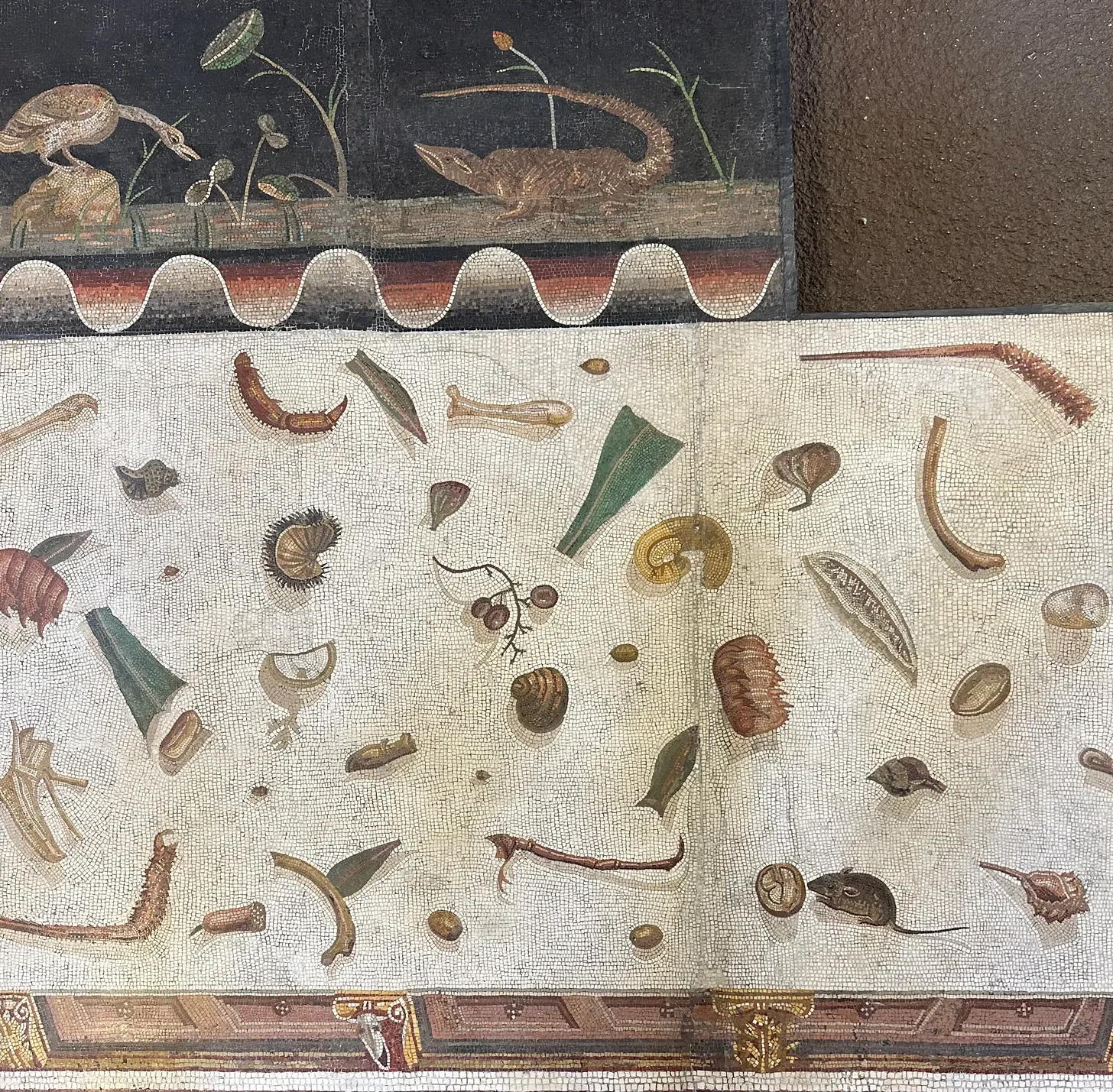
A while ago I was scrolling through Instagram and came across this mosaic floor that stopped me in my tracks - it was a modern floor made of mosaic tiles and covered in wonderful trompe l’oeil food debris. A quick bit of research lead to hours and hours online learning more about this style which actually dates back to the Romans (naturally).

The original concept of ‘Asarotos Oikos’ (Unswept Floor) can be attributed to Sosos of Pergamon - Pliny the Younger writes about him being a master of illusion. Sadly none of his work is thought to have survived but his technique lives on; the most famous, surviving, and frequently cited version is a 2nd-century AD Roman copy attributed to the artist Heraclitus (or Eraclito), currently located in the Vatican Museums. The mosaics depicted items (mostly food) that were luxury items - in particular shellfish, cherries, figs, walnuts and they were arranged to appear accidental - like they’d been discarded without another thought after a feast.

I have always been drawn to the notion of Trompe L’oeil in art and fashion - a trick of the eye, a quirky nod, a glimmer of humour perfectly and quietly executed. Art that creates a hyperrealistic 3D optical illusion on a two dimensional surface always grabs my attention and gets me excited. More specifically with this Unswept Floor style is the notion of capturing a fleeting moment in time ( a Roman feast) and making it somewhat permanent. The cast off food scraps that would have been swept away by staff after the meal are now immortalised in incredible detail - made up of tiny pieces of ‘tesserae’ or tiles. There’s humour to be found here - one man’s trash is another’s treasure and all that…. but more specifically the idea of finding beauty in the bones and head of a fish or the skin of fruit that has now been elevated in importance and given a permanent place on a masterpiece of engineering (and ostentatious wealth). Maybe not-so-quiet-luxury?

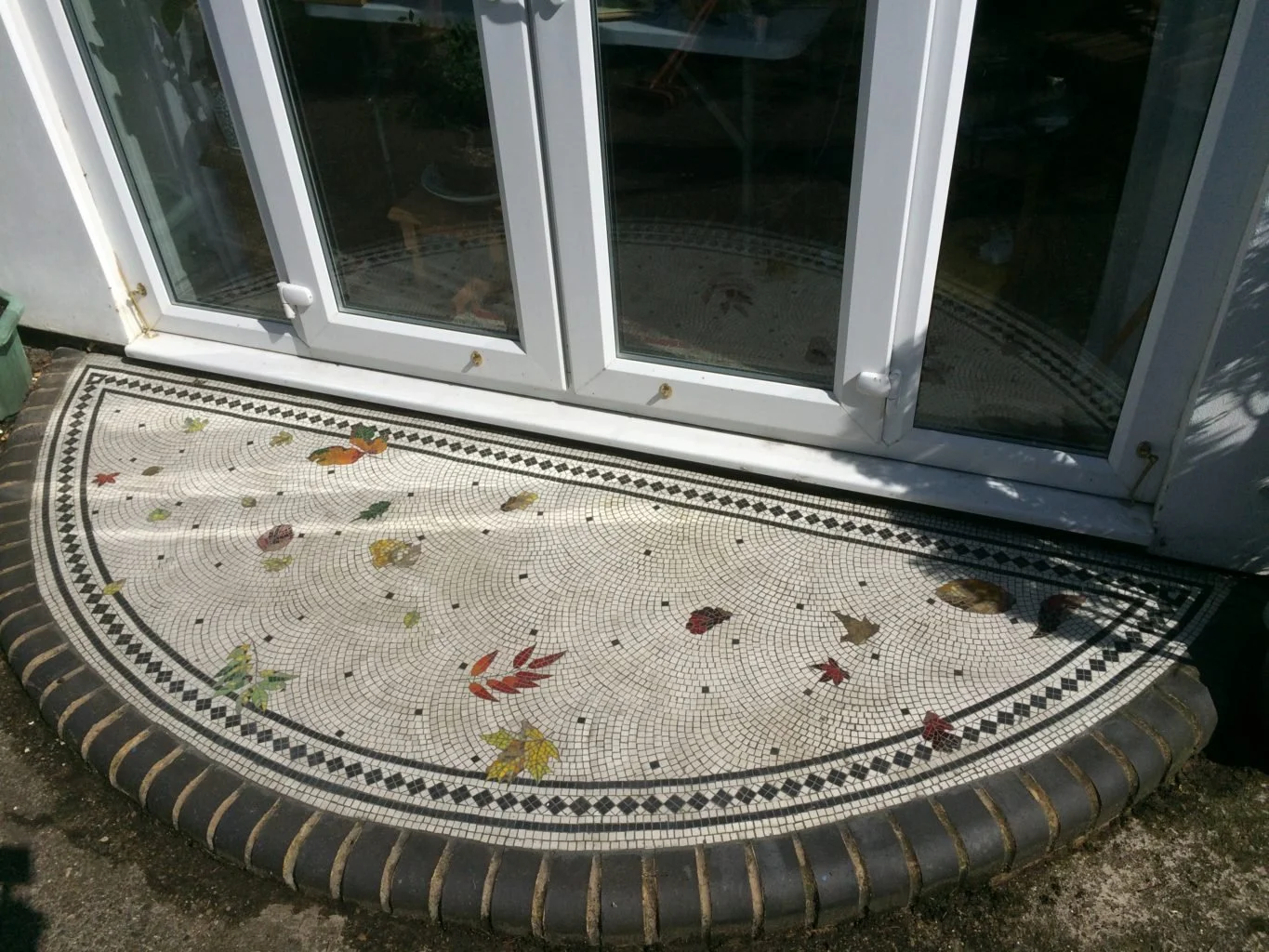
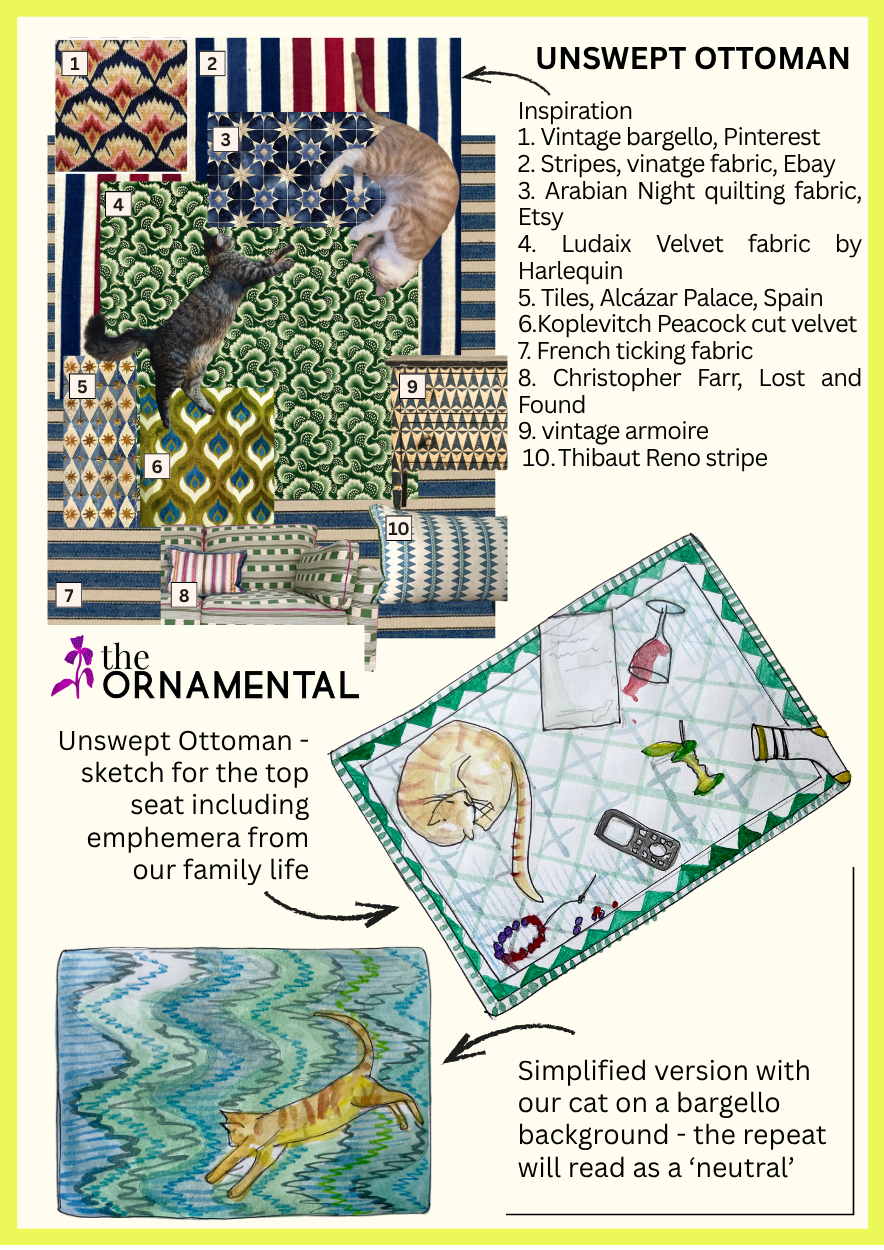
Many artists have revisited this idea - a quick google will show you endless interior interpretations (Unswept Rug, Unswept Porch, Unswept Steps, Unswept wall all garnered my attention!) and it immediately got me thinking what would my version be? As CEO of our household I am constantly picking up the detritus of family life - and that seems to centre around an ottoman that we recently acquired (second hand). Whilst the piece is very useful, well made, solidly built to withstand family life, it is not my favourite aesthetically speaking. It’s grey and expansive. Someone restrained and clever with a minimalistic vibe would be horrified to listen to the thought process that’s whirring in my brain right now….. can I make an ‘Unswept Ottoman’? what would that look like for us?

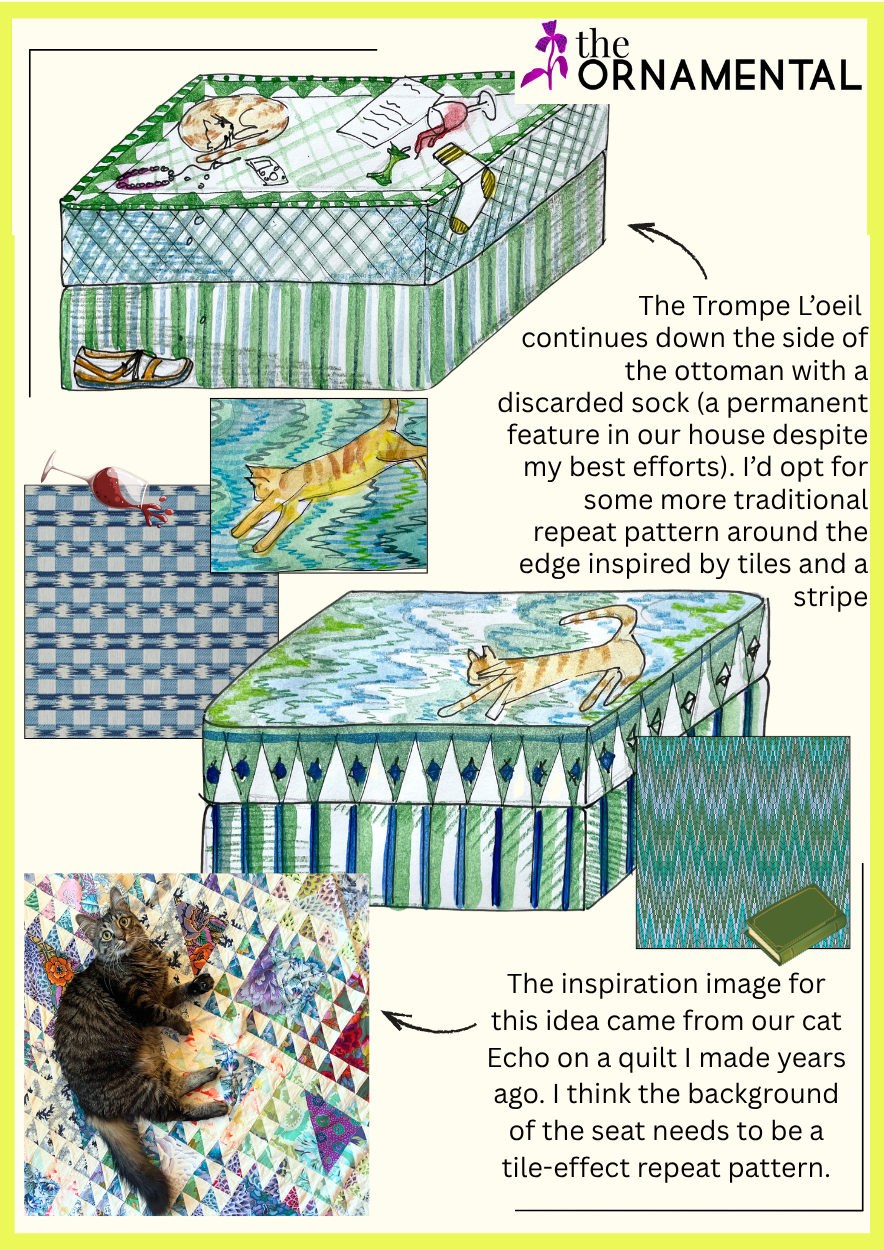
A remote control, a discarded craft project with hundreds of spilled beads, some half eaten post-school-snacks, an empty wine glass, a cat stretched out and some unsigned school forms that are ‘only’ a week late and lucky to have survived two weeks in my youngest girls backpack. Oh and socks, always socks……. I’ve been mulling ideas over in my head for the ULTIMATE stitching commitment - a needlepoint that would cover the entire ottoman, depicting our messy, loud, unruly family life from the perspective of a slightly withered and tired mother with a penchant for late night wine and an insatiable appetite for overreaching art projects.

Here are two mock ups that I am working on (note: I have a really hard time showing my work until it feels complete - I'm working on it, (what if I'm not done? what if no one likes it? what if I change my mind? but for the purpose of this article I think it is interesting to see the design process play out).

I like the connection between ancient mosaic and modern needlepoint tapestry - both techniques feature art built from tiny building blocks (tile versus stitches). There’s no doubt about it this would be HUGE undertaking - but its fun to take a stab at something large every now and again - and there’s room to combine with upholstery fabrics if the sides prove a stitch (or 1000s of stitches…) too much.

I hope to revisit this piece as I make progress in The Ornamental Studio. Please feel welcome to leave a comment below - what would be on your Unswept floor?

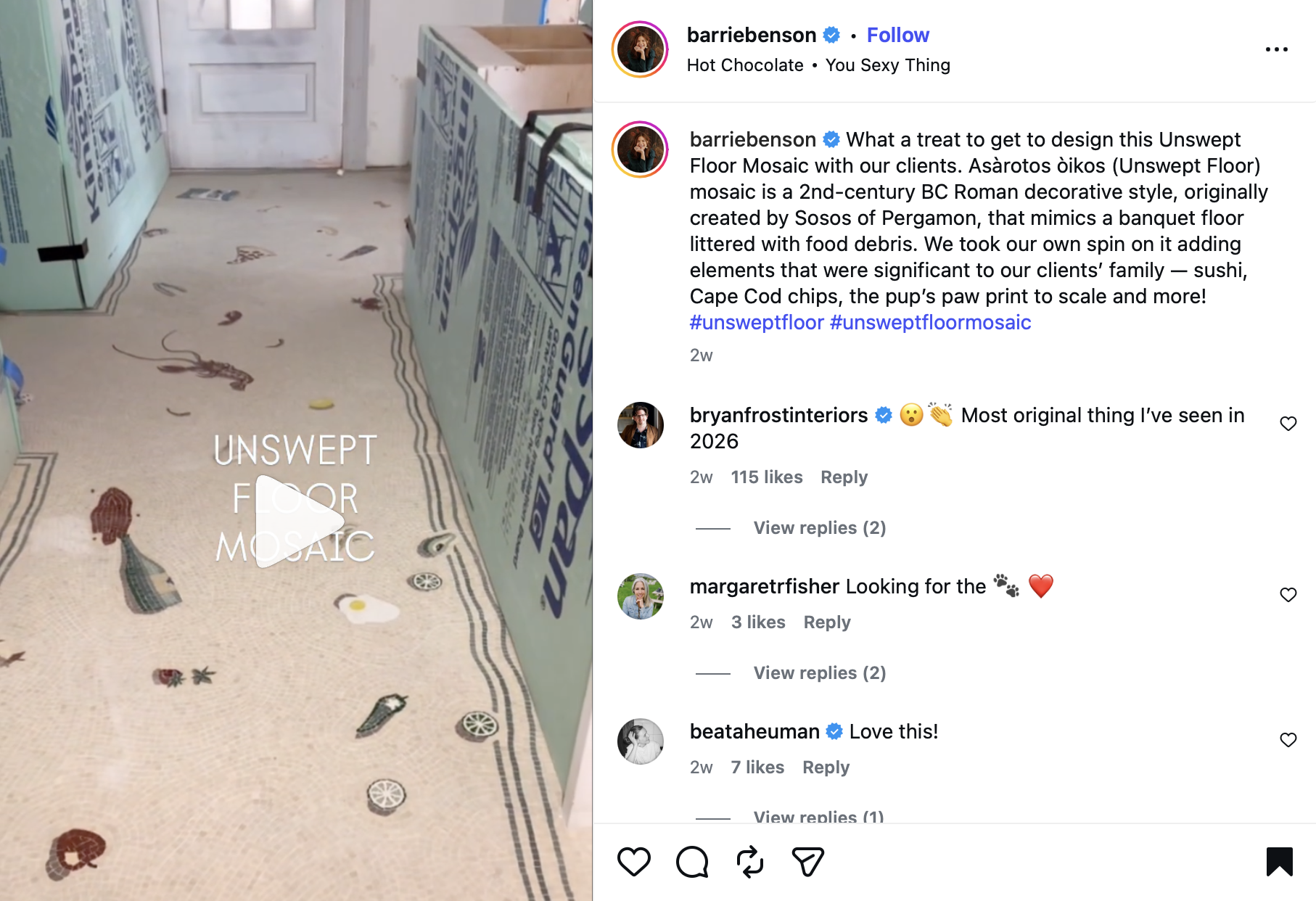
Barrick Bensons @barriebenson modern take on an Unswept Floor

Unswept Floor, The Vatican Museum, dates back to Hadrian, from the Avenrtine Hill in Rome

Unswept Step by Jane Franks in the UK, found on a delightful blog post by Helen Miles Mosaics

The Ornamental Studio design for an Unswept Ottoman, inspired by the Roman ‘Unswept floor’ Mosaic

Unswept Ottoman - depicting Trompe L’oeil scenes from our family life

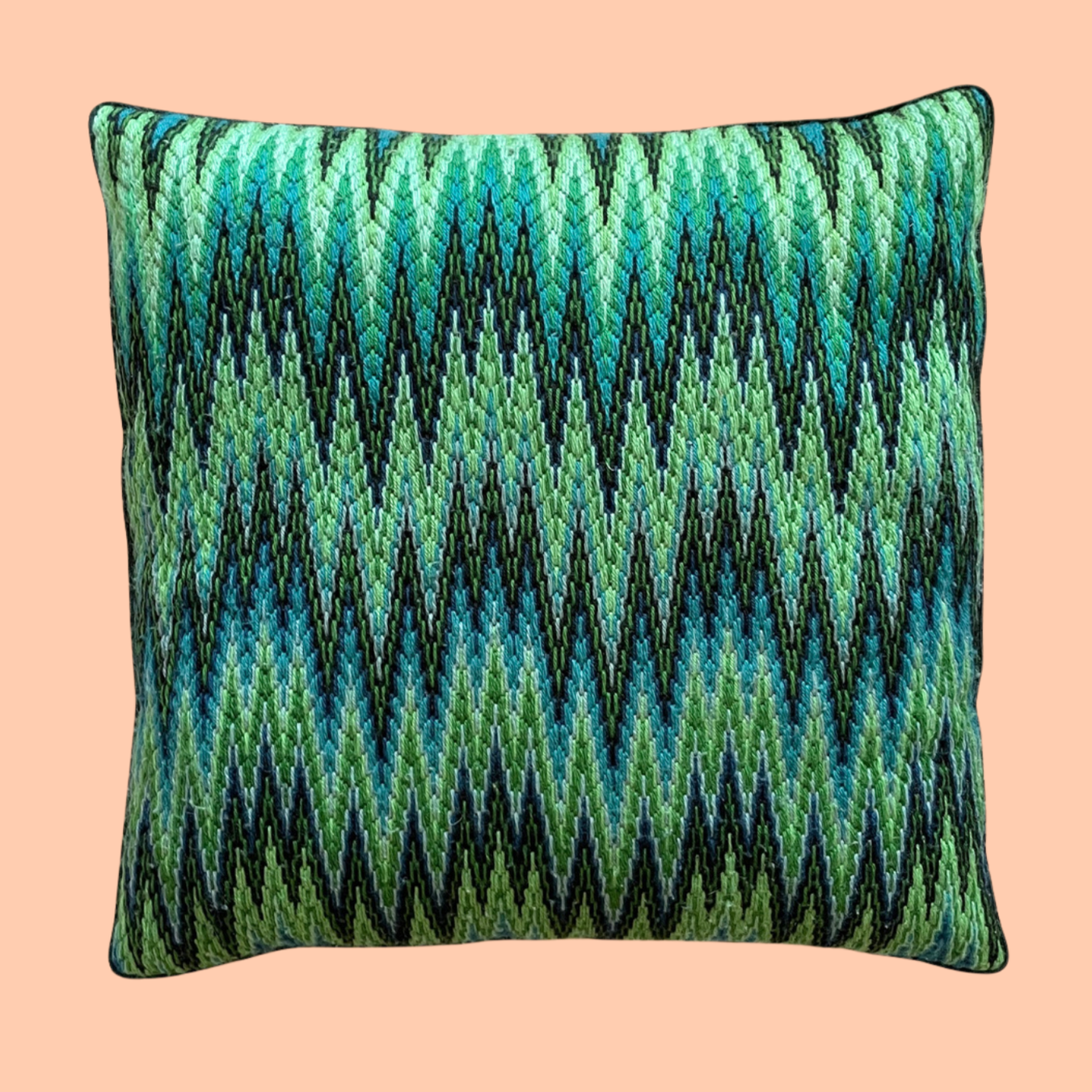
If you’d like to experiment with your own piece of this project you can find DIY Bargello pillow kits on my website

A Walk in The Met, NYC

gallery visitStephanie OshvaComment

March 26, I’m after some new inspiration, something new to me to learn about, and I haven’t been to the Met solo in years- going with my kids is one of the least relaxing parenting experiences I have had (the last time we went I took them to the Egypt exhibit on one of New York’s hottest days and they spent the whole time asking to go to the brutalist playground right outside the window…. reader, it was 90 degrees).

The thing about The Metropolitan Museum of Art is that no matter how many times I go I always find something surprising and it’s almost never the thing I’ve gone there to see. So with that in mind let me tell you about the utterly charming ‘Fanmania’ exhibit. I discovered this room on my way to ‘Art of the Arab Lands’ (a firm favorite of mine) - the blurb on the wall describes this as an investigation into why avant-garde artists incorporated fans into their work and sheds light on themes of gender, courtship, consumerism and appropriation.

This is a small exhibit of about 75 pieces in total - drawn from all over The Met collection, I love it when museums do this - ‘shop from what you already have’ and then find a common thread, it gives you a glimpse into the variety of what this incredible museum holds through the lens of one idea.

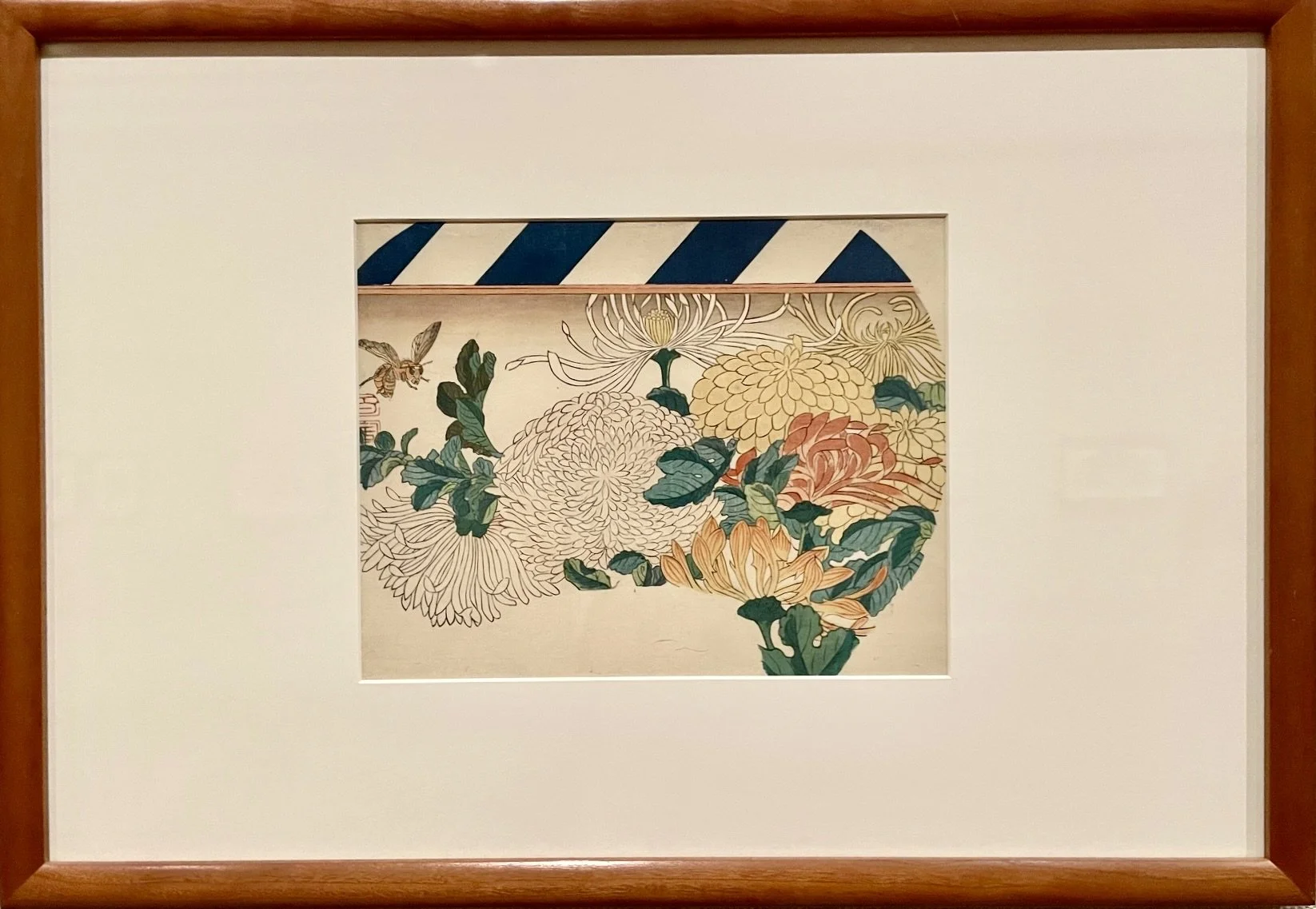
Aesthetically there were many pieces that caught my eye - I'm drawn to pattern and colour so the Hiroshige woodblock from 1840 got my attention straight away. I don’t even think it was designed to be a three dimensional fan - it just featured one in a composition, but i’m a HUGE fan of (sorry….. the puns write themselves) of a Japanese chrysanthemum flower.

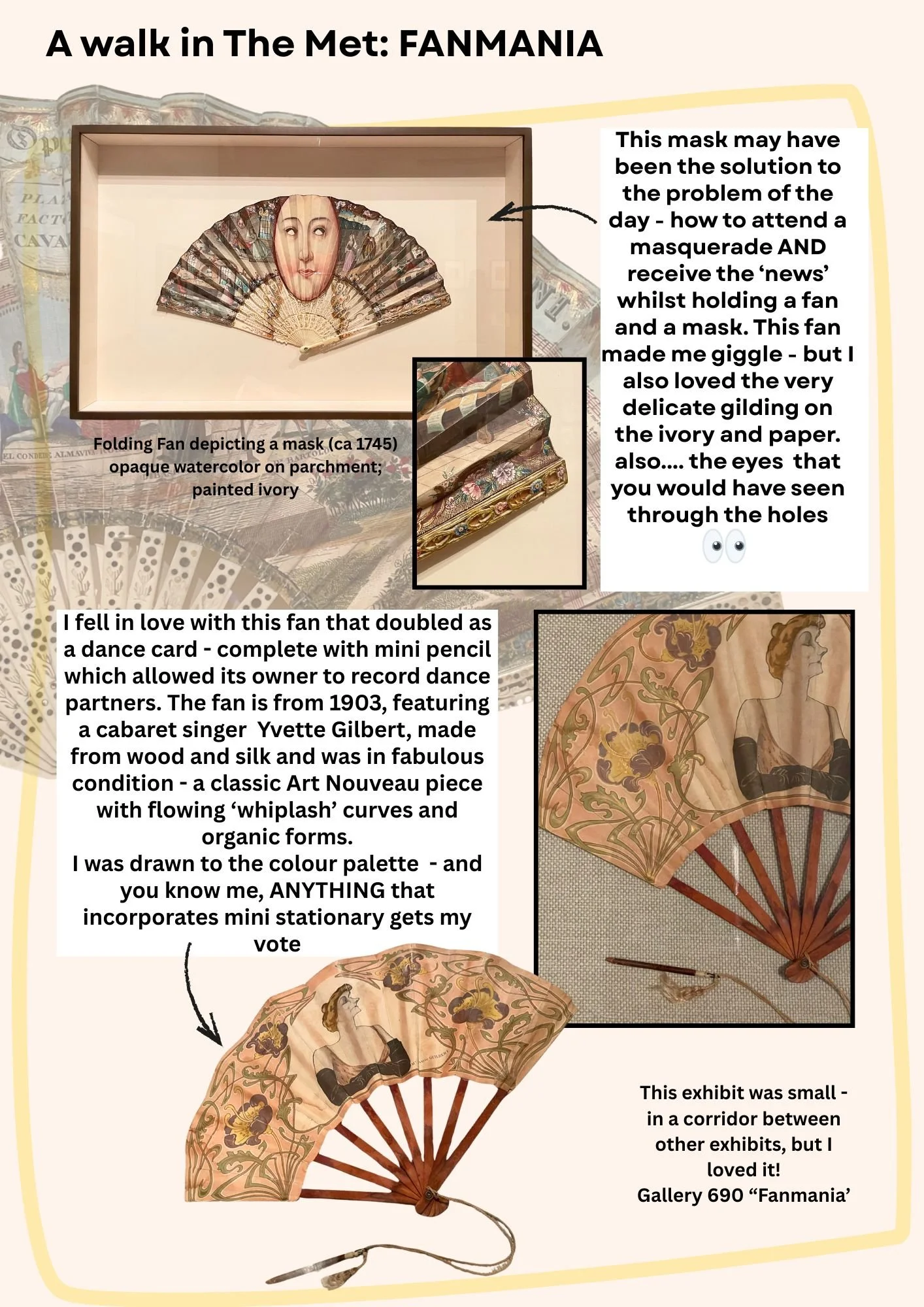
Next up I chose a British folding fan (I might be biased…) depicting a mask -from around 1745. It made me giggle - it’s the period version of the sideways eyes emoji, you can just imagine how the owner (wearer?) would have looked with her (making a WILD assumption here) eyes peeping through. The watercolour on parchment was exquisite and I loved that the description explained how the fan was a kind of ‘kill two birds with one stone’ solution - allowing the owner to attend a masquerade, obviously wearing a mask AND holding a fan all whilst receiving ‘the news of the day’ - gossip to you and me. Brilliant, love a multipurpose piece of design.

Another fan that got my attention was a French fan from 1903, featuring a cabaret singer Yvette Guilbert. The manufacturer (Eventails Choumara) specialised in fans featuring celebrity performers and this piece was for the annual Lawn Tennis Ball and Cotillion at the Grand Hotel Engadiner Kulm. Again - sticking with this idea of dual purpose I loved that this fan would have also been used as a dance card and the owner could use the tiny pencil to note down her dance partners- a feature I learnt that wasn’t even particularly new, it has also been seen on fans from the 18th century. Still - anything that comes with tiny stationary baked in will always get my vote.

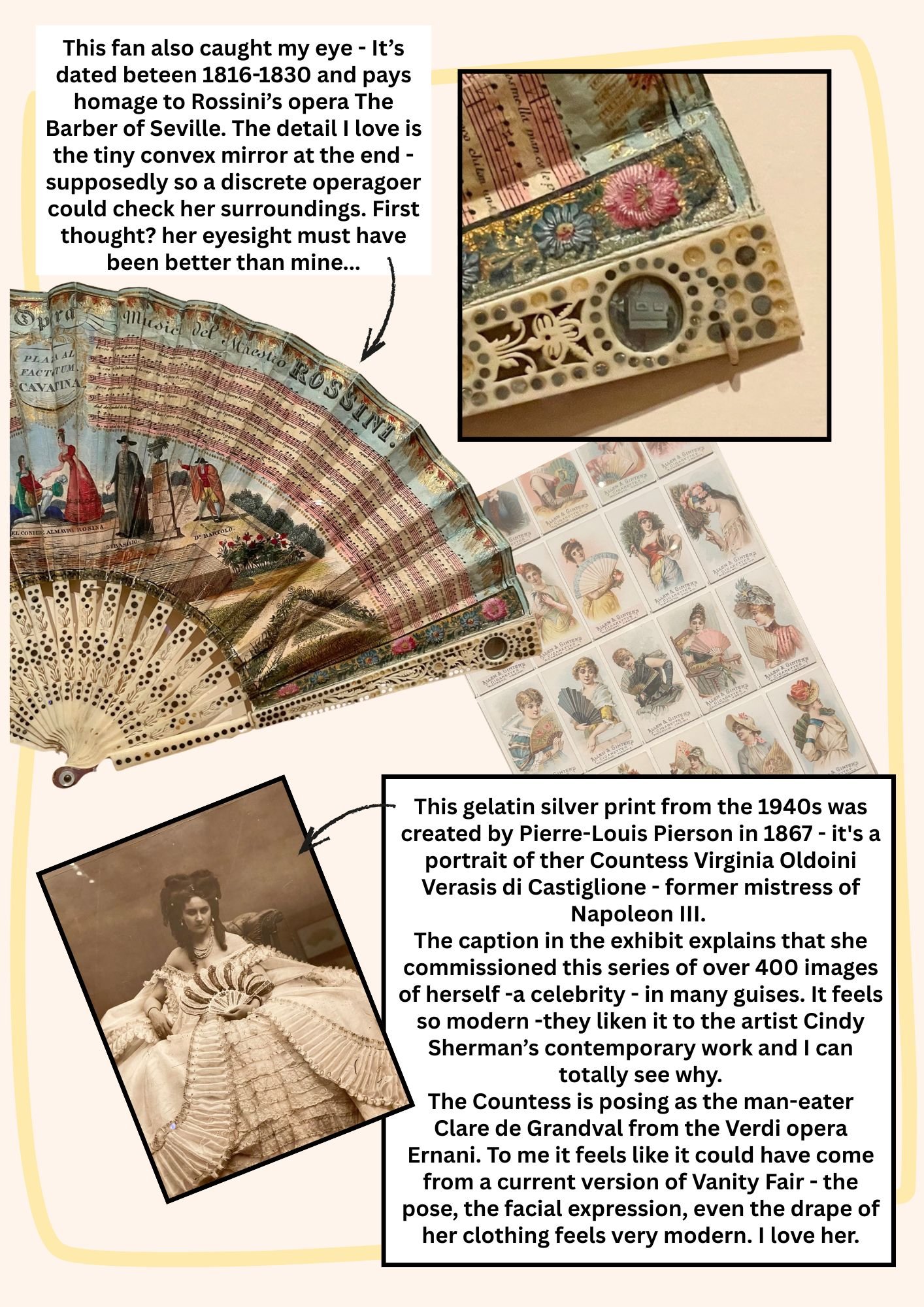
Lastly I’ve picked out a fan from Fernando Coustellier (dated somewhere around 1816-1830) - it features a scene from Rossini’s The Barber of Seville which debuted in Paris in 1819. The fan is stunning in detail and features a tiny convex mirror on the end of the ivory - the exhibit politely suggests “it might have been useful for an operagoer desiring to discretely check her surroundings” - a feature I’d welcome in any modern day accessories. How charming. How useful. (insert sideways emoji eyes)

 
Utagawa Kunisada 1786-1864 - Woman With A Folding Fan. I loved the textures and mark making in the background

Utagawa Kunisada 1786-1864, woodblock print

Utagawa Hiroshige 1797-1858, woodblock print

Utagawa Hiroshima 1797-1858, woodblock

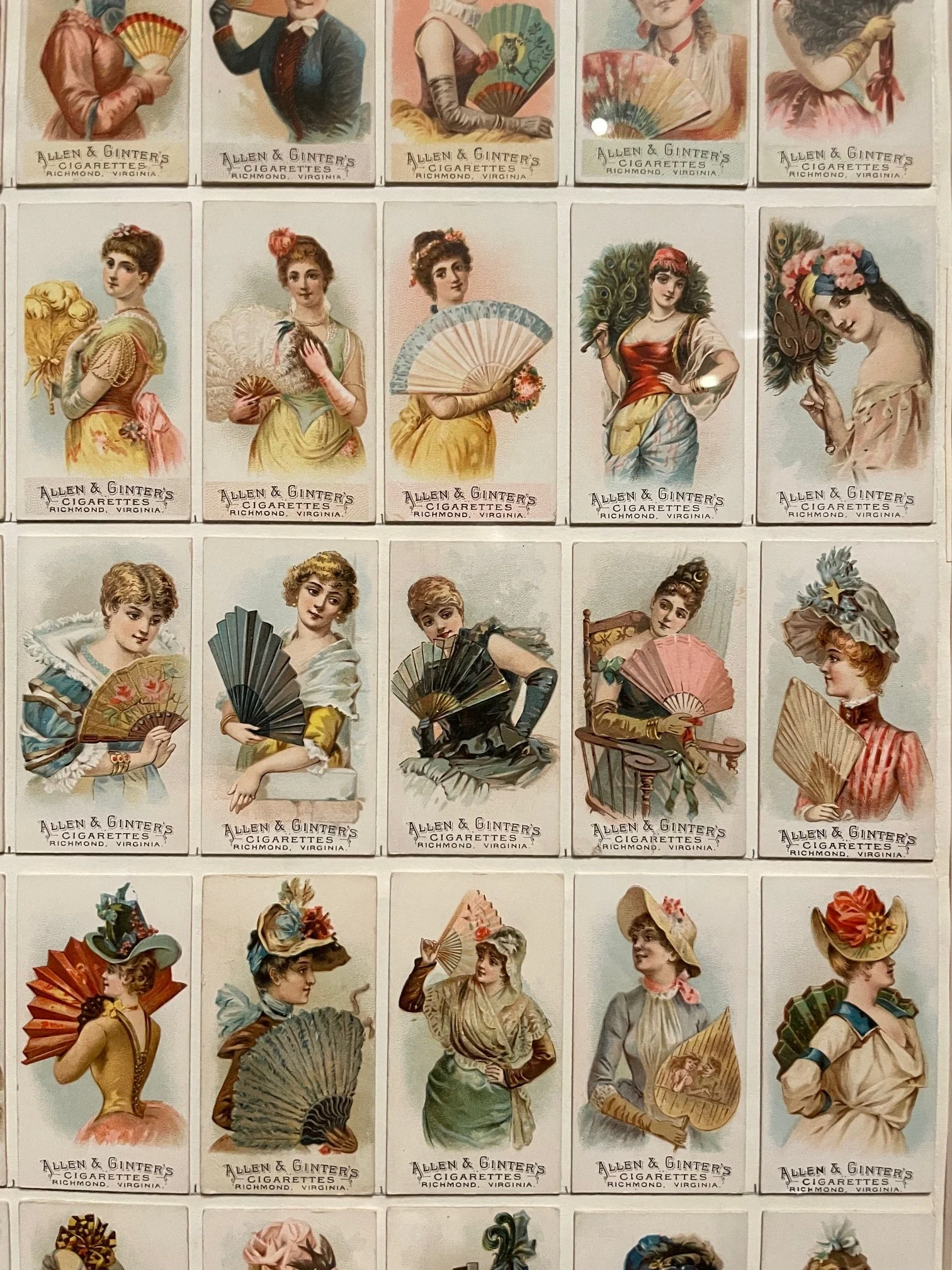
Fans of the Period, trade cards for Allen&Ginter 1889

A Welcome, and some unfinished thoughts

Stephanie OshvaComment

Some ideas arrive fully formed, most don’t.

Notes from The Ornamental - a journal - is where the unfinished ideas live; sparks of an idea, rabbit holes I've fallen down late at night, the exhibition I have visited and can’t stop thinking about, a new (to me) technique I discovered and need to try immediately, the colour combination I saw on the subway the other day that now lives on my camera roll. Also the occasional random link - just for fun- because why not? It got my attention and I'd like to share it with you.

Think of this as my studio in journal form. If you have ever been in a real working studio you’ll know it is never really tidy. There are threads hanging off things, there is an experiment in the corner that might become something wonderful or it might become nothing at all. There's a box of references, a half-finished sample, a cup of tea going cold because something interesting just happened.

That's this.

What you’ll find here

Exhibitions I have visited or ones I'm reading about, techniques and crafts I'm curious about or have experimented with, whether or not they are strictly my world . You will find tutorials for things I’ve referred to on Instagram (hi! come find me ), and we can start conversations and figure some things out together. ‘Notes’ from The Ornamental studio is exactly that - following a thread of an idea to see where it leads.

A Little About Me

I am Stephanie, the founder of The Ornamental, the person behind all the kits and DIY tutorials. I started out in fashion design - interning and working at Alexander McQueen, Chloé, John Galliano, Gianfranco Ferré and Diane von Furstenberg (which bought me to NYC for 3 months and here I am 18 years later…). My background is in womenswear - I studied Knitwear design at Central Saint Martins in London and loved it. I have had an insatiable appetite for everything crafty since I was a little girl and grew up in a very creative house - there was nothing my parents couldn’t DIY and we have a family motto coined by my mum “we could make that at home”. I think I made my first wonky needlepoint around aged ten - it featured 4 animals and the giraffes legs bent the wrong way - it still has a place at home, it has put in a very decent shift!

I am passionate about the art of needlepoint, knitting, embossing, sewing - honestly really anything creative, and even more passionate about sharing this with others - it is no secret that I long for a studio of my own one day and I am here to say it loudly….. I'd like to manifest a beautiful cosy space ( tiny probably….. this is NYC after all and I am the queen of living in tiny spaces).

The Ornamental grew out of the belief that making things with your hands is one of the most nourishing things you can do; the simple act of creating something slowly and deliberately is good for you. The kit boxes that I design are my way of inviting you in.

‘Notes’ is the messier companion to The Ornamental and you are very welcome here.

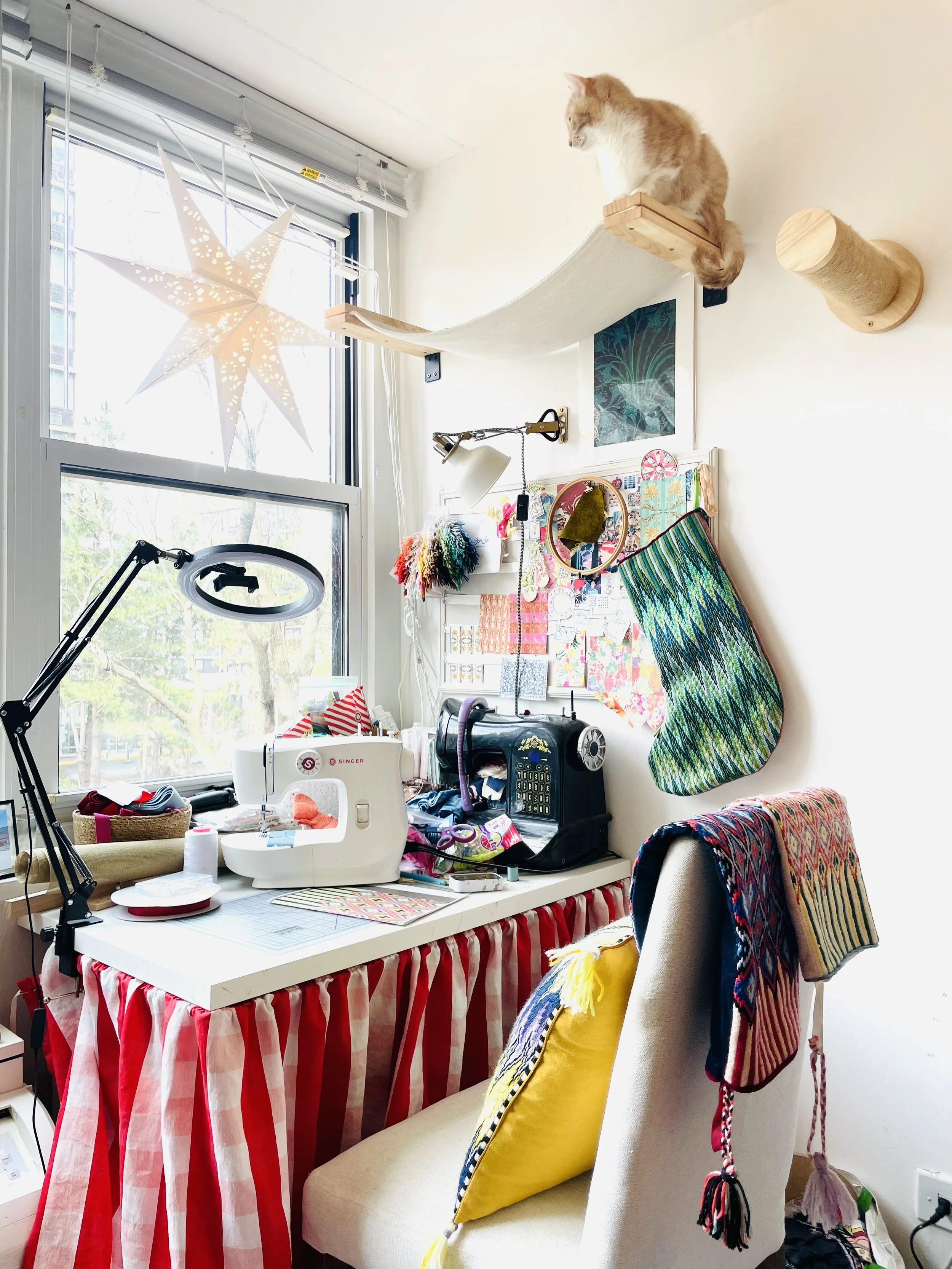
The Box Room desk - overlooked by Mochi the spicy and highly opinionated cat

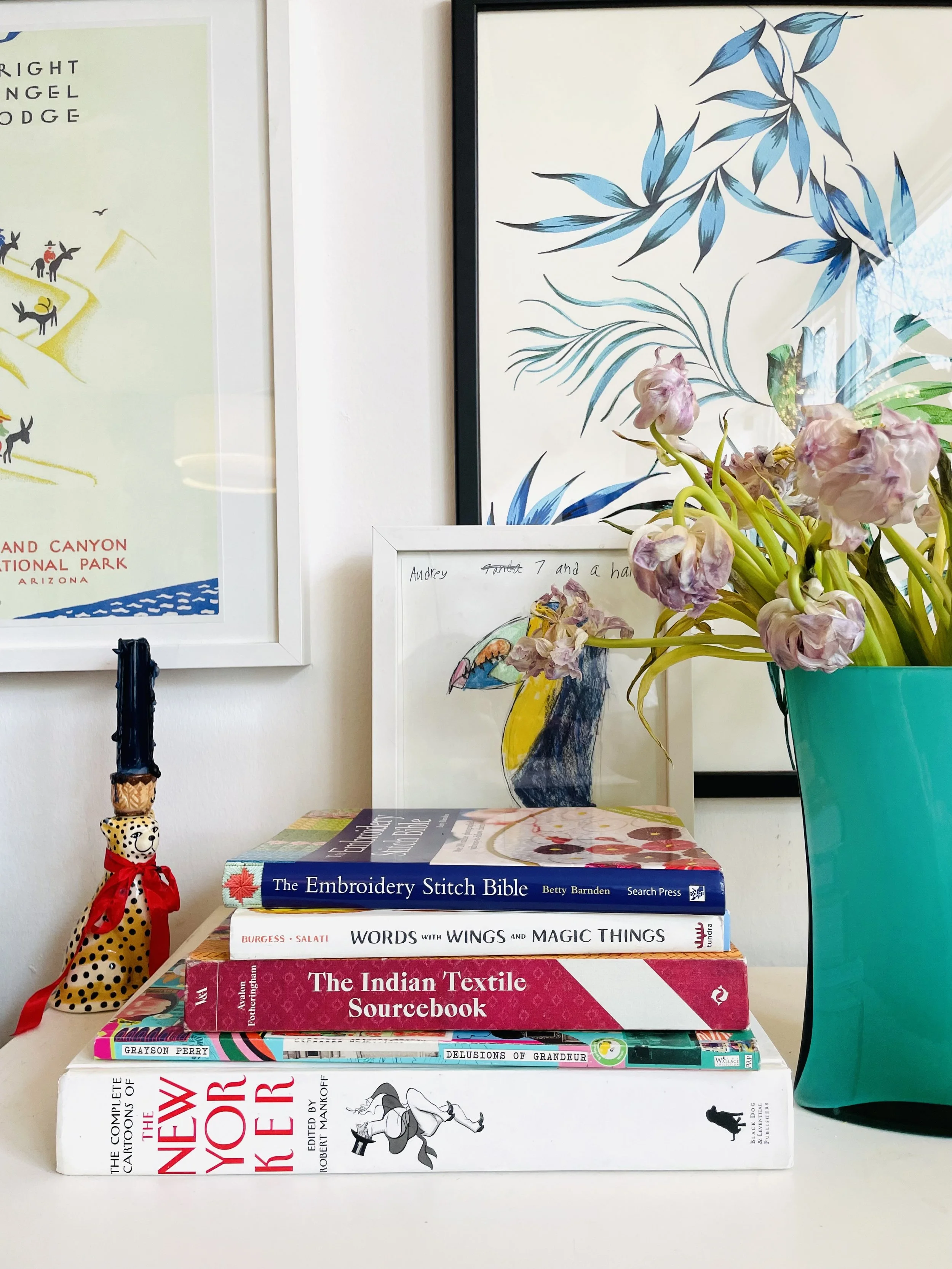
Currently really into: Delusions of Grandeur, Grayson Perry at the Wallace Collection/ The Indian Textile Sourcebook / The Embroidery Stitch Bible and Words With Wings And Magic Things illustrations by Doug Salati

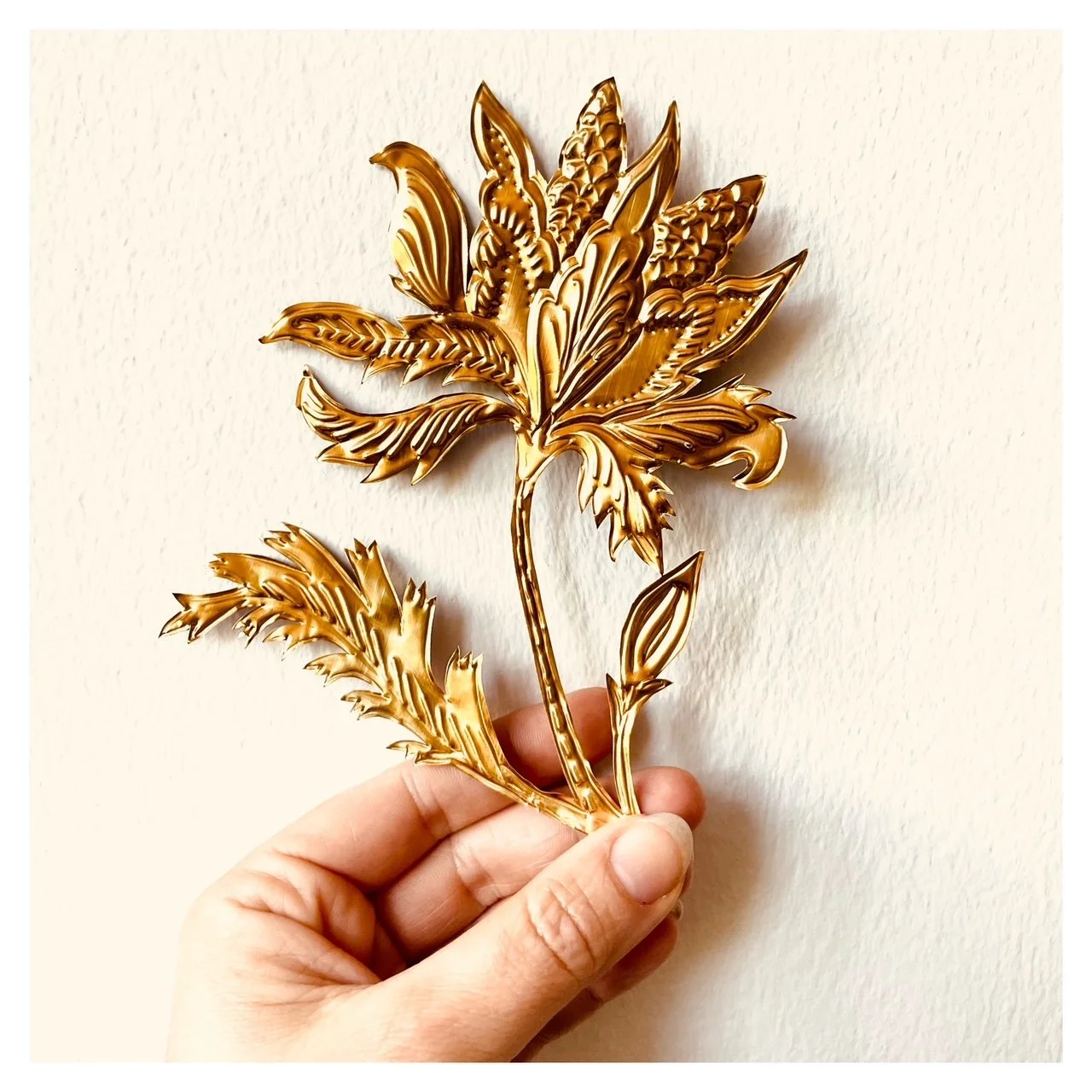
An experiment in tin embossing - this one is from a recycled tomato paste tube

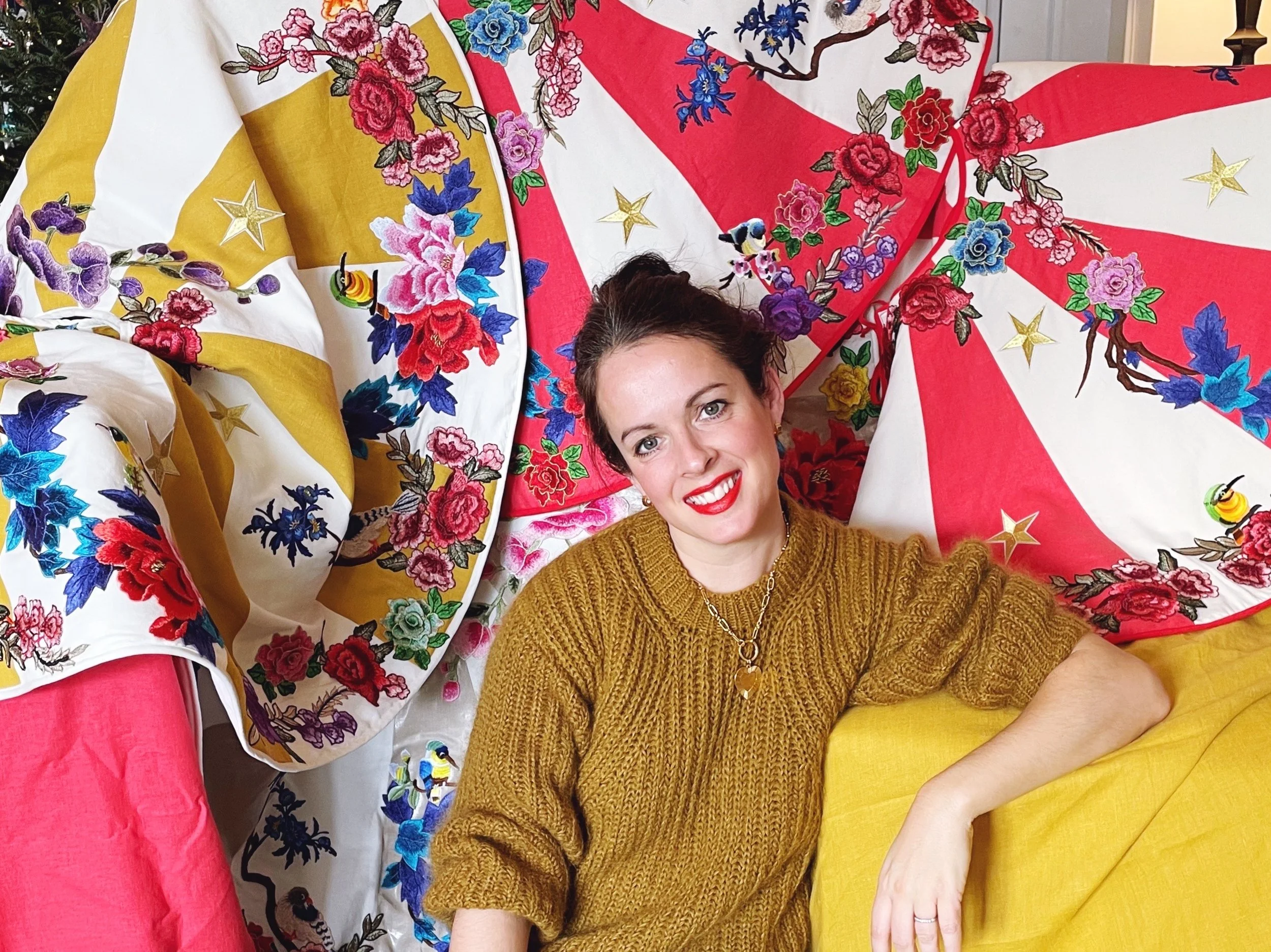
Big project//small space - Christmas Tree skirts embellished with Flora and Fauna made with love from our apartment in downtown Manhattan since 2019